
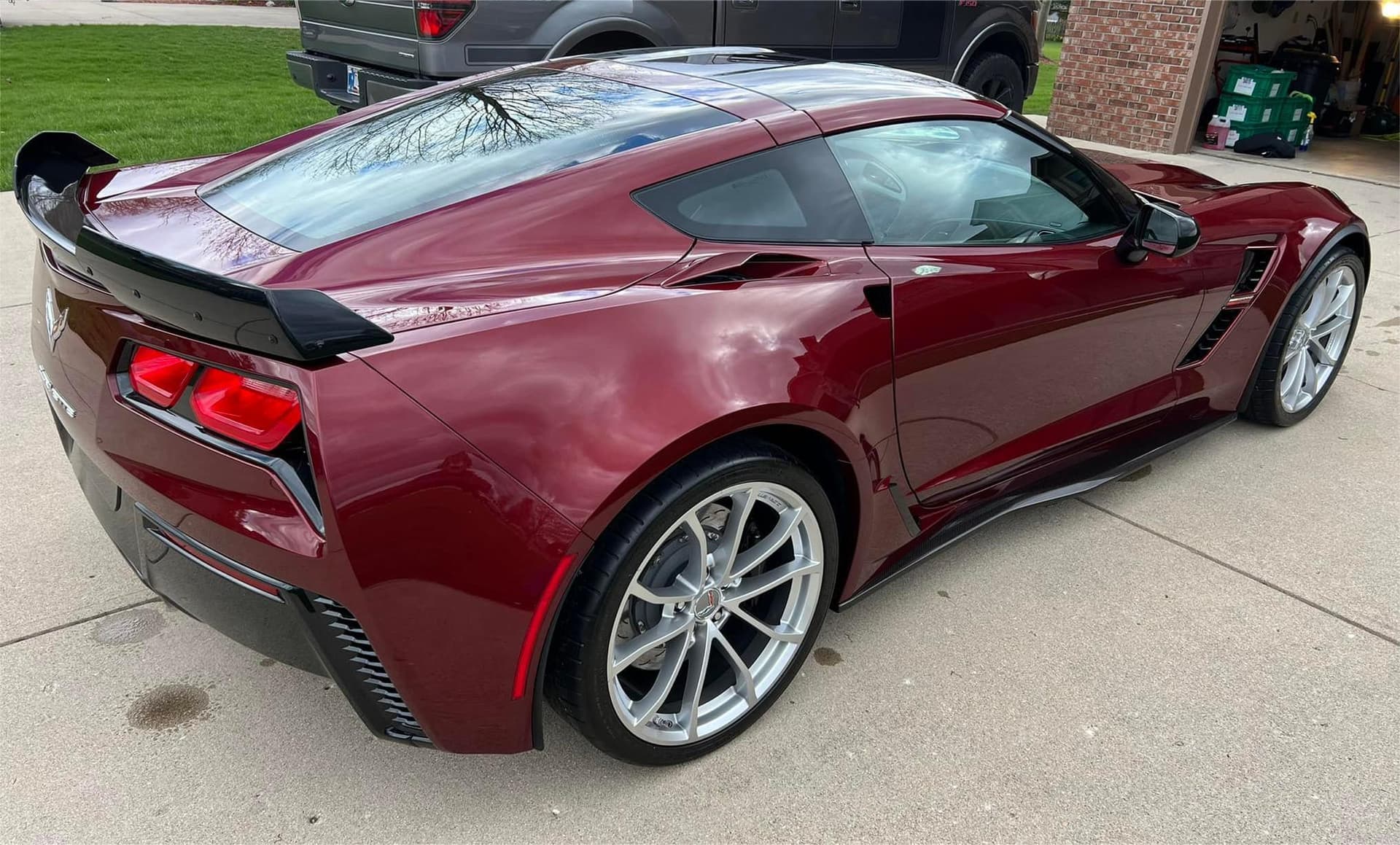
On a daily driver, car wax typically lasts 1 to 3 weeks for spray wax, 4 to 8 weeks for carnauba paste or liquid wax, and 2 to 6 months for synthetic or hybrid waxes. Ceramic spray waxes last about 2 to 4 months, sealants 4 to 6 months, and a professional ceramic coating 1 to 5+ years. Sun, frequent washing, harsh soaps, automatic car washes and outdoor parking push you to the low end. When water stops beading tightly, it's time to rewax.
Manufacturer claims and real-world performance rarely match. The bottle that says "12-month protection" almost never delivers a full year on a daily driver. Here's what you can actually expect from each product category, and what makes the difference.
Car Wax Durability at a Glance
These are the canonical MDE figures. Use the same numbers on every post.
| Product type | Examples of the type | Realistic life on a daily driver | Rewax / reapply |
|---|---|---|---|
| Spray wax / quick detailer | Spray carnauba waxes and detail sprays | 1 to 3 weeks | Every few washes |
| Carnauba liquid wax | Liquid carnauba blends | 4 to 8 weeks | About every 1 to 2 months |
| Carnauba paste ("hard") wax | Paste carnauba, show waxes | 4 to 8 weeks (premium pastes a little longer in ideal conditions) | About every 1 to 2 months |
| Synthetic / hybrid wax (paste or liquid) | Polymer waxes, carnauba-polymer hybrids such as Collinite No. 845 (Collinite rates it for 4 to 7 months) | 2 to 6 months | Every 2 to 6 months |
| Ceramic (SiO2) spray wax / spray sealant | Ceramic or "Si-doped" sprays | 2 to 4 months | Every 2 to 4 months |
| Synthetic sealant | Polymer paste or liquid sealants | 4 to 6 months (up to 8 to 10 in ideal conditions) | Twice a year |
| Professional ceramic coating | Installer-applied coatings | 1 to 5+ years | Yearly maintenance topper |
Machine vs hand: a wax applied with a DA polisher lasts about as long as the same wax applied by hand. The machine helps with even coverage, not durability. The prep (wash, clay, polish) matters far more.
Carnauba paste and liquid waxes: 4 to 8 weeks
A quality carnauba blend applied properly to clean, decontaminated paint delivers 4 to 8 weeks of meaningful protection on a daily driver. Premium pure carnauba pastes (the high-end show-car waxes) may stretch slightly longer in ideal conditions, but their advantage is mostly aesthetic depth, not durability.
What shortens carnauba life:
- Hot soap car washes
- Heavy UV exposure
- Multiple washes per week
- Application over contaminated or unprepped paint
What extends it:
- Clay decontamination before application
- pH-neutral shampoo for maintenance washes
- Garage parking
- Mild climate
Synthetic paste and liquid sealants: 4 to 6 months
Polymer-based sealants typically deliver 4 to 6 months on a daily driver in moderate conditions. Top-tier sealants under ideal conditions (garage-kept, infrequent washing, mild climate) can reach 8 to 10 months, but that's the exception, not the rule.
The chemical bond to clear coat, and the synthetic nature of the polymer, is what gives sealants their longer life over wax.
Spray waxes and quick detailers: 1 to 3 weeks
Spray-on wax products are convenience tools. They add a thin layer of protection and a fresh slick surface, but they don't build up substantially over multiple applications. Expect 1 to 3 weeks of effective protection per application: they're meant to be reapplied frequently.
Ceramic-infused spray products: 2 to 4 months
The newer category of "ceramic spray" or "Si-doped" spray waxes and sealants performs better than traditional spray products. Real-world durability is typically 2 to 4 months on a daily driver, with some performing closer to a true sealant.
These are good middle-ground products. Less labor than a paste sealant, longer life than a spray wax, easier than a ceramic coating. Expectations should match: they're not ceramic coatings in a spray bottle despite the marketing.
Professional ceramic coatings: 1 to 5+ years
Real ceramic coatings (the kind applied by a trained installer over fully prepped paint) last in defined ranges:
- Consumer-grade DIY ceramic kits: 1 to 2 years realistic, despite often claiming 5
- Mid-grade professional coatings: 2 to 3 years
- Top-tier professional coatings: 3 to 5 years
- Top-tier with annual maintenance topper: 5 to 7 years
The wide range reflects product quality, prep quality, installer skill, and maintenance.
What "lasts" actually means
Durability claims can mean different things:
- Beading/sheeting performance: usually the first thing to degrade
- Gloss retention: degrades more slowly than beading
- Chemical resistance: degrades alongside the protective layer
- Hydrophobicity: typically the last to fully fail
When a sealant "stops working," what usually happens first is that water stops beading aggressively: the chemical protection is mostly still there, just at reduced strength. By the time gloss visibly fades, the protection layer is functionally gone.
Why marketing claims don't match reality
Manufacturer durability ratings come from controlled lab tests: ideal temperature, no UV, no detergent exposure, controlled humidity, no physical contact. Real-world conditions are nothing like the test environment.
A "12-month sealant" tested in a lab might give 4 to 6 months on your actual car. The product isn't lying: the test conditions just don't match how you drive. Pay attention to detailer field reports and owner experience over marketing copy.
How to maximize what you have
Three habits make the most difference:
- Prep matters more than product: wax over contaminated paint fails fast. Decontaminate first.
- Wash technique extends durability: pH-neutral soap, two-bucket method, soft mitt.
- Maintenance toppers refresh protection: a spray ceramic detailer between full applications keeps the slick layer fresh.
With proper prep and care, the upper end of each product's range is achievable. Without prep, you'll always be at the lower end.
What Shortens Car Wax Life
- Automatic car washes: strong detergents and brushes strip wax fastest, and a spray wax can be gone after one or two trips. Touchless washes are gentler but still use strong soaps. A "hot wax" add-on at a car wash is a short-lived spray, usually lasting days to a couple of weeks.
- Harsh soap: dish soap, degreasers and "strip" washes remove wax on purpose. Use a pH-neutral car shampoo.
- Sun and heat: UV and hot panels break carnauba down fastest. In the Southern summer, expect the low end of each range.
- Rain, road salt and pollution: acid rain, salt and grime wear protection down, especially in winter.
- Outdoor parking: sun, sap, bird droppings and pollen all wear it down. A garaged car, or one that sits undriven, keeps wax noticeably longer.
- Washing often: every wash removes a little. Weekly washers rewax more often than monthly washers.
- Poor prep: wax over dirty or contaminated paint doesn't bond well and fails early.
Is Your Wax Gone? The Beading and Sheeting Test
After washing and drying, mist or pour clean water on a horizontal panel (hood or roof) and watch:
- Tight, round beads that roll off easily: the wax is still working.
- Big, flat, irregular beads: it's wearing thin, so plan to rewax soon.
- Water sheets off slowly or sits flat and clings: the protection is gone, so rewax.
Two more checks: run a clean hand inside a plastic sandwich bag over the paint (rough means contaminated, so clay before rewaxing), and look at the gloss in sunlight (dull, flat paint means the wax has worn off). Test the hood and roof first. They wear fastest because they get the most sun.
How Often Should You Wax Your Car? A Seasonal Schedule
For most daily drivers, wax every 1 to 3 months, or use a sealant or synthetic wax every 4 to 6 months. A simple schedule:
- Spring: wash, clay and apply a full wax or sealant after the winter salt and pollen.
- Summer: top up with spray wax every few washes. Carnauba wears fastest in heat, so rewax about every 4 to 6 weeks if you use it.
- Fall: a full wax or sealant before winter. This is the most important one in salt states.
- Winter: top up with spray wax or a ceramic spray when the temperature allows. Check the label for its minimum application temperature.
How to apply it: How to Apply Car Wax.
Can You Put Wax Over a Sealant or Ceramic Coating?
- Wax over sealant: yes. This is a common combination. Apply the sealant first and let it cure for the time on its label, then add carnauba on top for extra gloss. The sealant gives durability, and the wax adds warmth and slickness.
- Wax over a ceramic coating: usually not needed, and it can hide the coating's water behavior. A coating is best maintained with the coating maker's own topper or a ceramic spray. If you do wax over it, the wax lasts about as long as it would anywhere else.
- Sealant or ceramic over wax: no. Most sealants and coatings need bare, clean paint to bond, so remove the wax first with a panel wipe.
Comparing the three: Ceramic Coating vs Wax vs Sealant.
How Long to Wait After Waxing Before Rain or a Wash
- Rain: most waxes need time to set before getting wet, and some sealants and ceramic sprays need several hours or more. If rain is forecast, wax another day or work in a garage. Check the product label for its cure time.
- Washing: a common rule is to wait at least a day or so before washing, and longer for sealants and ceramic sprays. Use the time on the label.
- Stacking layers: if you're adding a second coat, wait the time the label gives between coats (often about 12 to 24 hours for paste waxes). More than two coats rarely adds protection.
Does Car Wax Expire? Shelf Life of Wax Products
Car wax doesn't have a strict expiration date for most brands, but it does age. Unopened, sealed wax typically stays usable for years if stored cool and dry. Once opened:
- Paste wax can dry out and harden if the lid isn't tight. A slightly dry paste often still works.
- Liquid wax and sealants can separate or thicken. Shake them well. If it stays lumpy or separated, or smells off, replace it.
- Spray wax can separate or lose performance after a couple of years.
- Ceramic sprays and coatings have the shortest shelf life once opened, because the SiO2 reacts with moisture in the air. Follow the maker's date.
Store all of them between about 40°F and 90°F, out of the sun, and never let them freeze. If a product has an expiration or "best by" date on the label, use that.
Is Professional Waxing Worth It, or Should You DIY?
Both get real protection on the paint. The difference is durability and finish quality, not whether it "counts" as protection.
DIY waxing costs less upfront and works fine for regular maintenance between deeper services. The tradeoff is technique: uneven application or wax left to dry too long before buffing can leave hazing or streaks, especially on dark paint.
Professional waxing typically uses higher-grade products and even, practiced application, which tends to last longer and finish more consistently than a DIY pass. It costs more per visit but saves the time and trial-and-error of doing it yourself.
If you're already comfortable with the DIY steps in our how to apply car wax guide and enjoy the process, there's no reason to pay for something you can do well yourself. If you want a guaranteed even finish without the learning curve, professional application is the better call.
Want it done for you?
Our mobile detailers wash, decontaminate and apply a hand wax, synthetic sealant or ceramic spray at your home or office, matched to how long you want the protection to last. Compare waxing packages or get a free quote.
Frequently Asked Questions
How long does a car wax last?
On a daily driver: about 1 to 3 weeks for spray wax, 4 to 8 weeks for carnauba paste or liquid, and 2 to 6 months for synthetic or hybrid wax. Garage-kept cars that are washed gently reach the top of each range.
How long does carnauba wax last?
About 4 to 8 weeks for paste ("hard" wax) or liquid carnauba. Premium show pastes may stretch a little longer in ideal conditions, but their main advantage is depth of shine, not durability.
How long does spray wax last, like Meguiar's Quik Wax?
Spray waxes typically last 1 to 3 weeks on a daily driver, and less through automatic car washes. They're meant for quick top-ups between full waxes. Meguiar's Ultimate Quik Wax is one example of this type.
How long does wax last if I go through a car wash?
Automatic washes shorten every range. Expect a spray wax to be mostly gone after one or two washes, and carnauba to last closer to 2 to 4 weeks with frequent automatic washes. A sealant or synthetic wax survives them much better. Hand washing with pH-neutral soap keeps wax the longest.
Does ceramic spray wax last longer than carnauba?
Yes. Ceramic (SiO2) spray waxes last about 2 to 4 months, and synthetic or hybrid waxes 2 to 6 months, compared with 4 to 8 weeks for carnauba. A professional ceramic coating lasts 1 to 5+ years. Carnauba still gives the warmest-looking shine.
Does machine-applied wax last longer?
Not really. A DA polisher spreads wax more evenly and saves time, but durability depends on the product and the prep. A machine polish before waxing makes the wax look better and bond to cleaner paint.
What does car wax actually do?
It adds a thin sacrificial layer over the clear coat that makes water bead, adds gloss, and helps protect the paint from UV, bird droppings, sap and grime. It doesn't remove scratches or swirls; that's polishing or paint correction.
How long should you wait to wax a new car?
Factory paint is baked and cured at the plant, so most new cars can be washed and protected right away. A careful wash, decontamination and wax or sealant is a good start. Freshly repainted (body shop) panels are different: ask the shop, because many recommend waiting several weeks before waxing.
Car Waxing Near You
AtlantaBaltimoreBirminghamColumbusDallasDenverHuntsvilleIndianapolisJacksonvilleLos AngelesMemphisMinneapolisNew YorkNorfolkOrlandoSan AntonioSan JoseSavannahSeattleTampaTulsaWilmington