
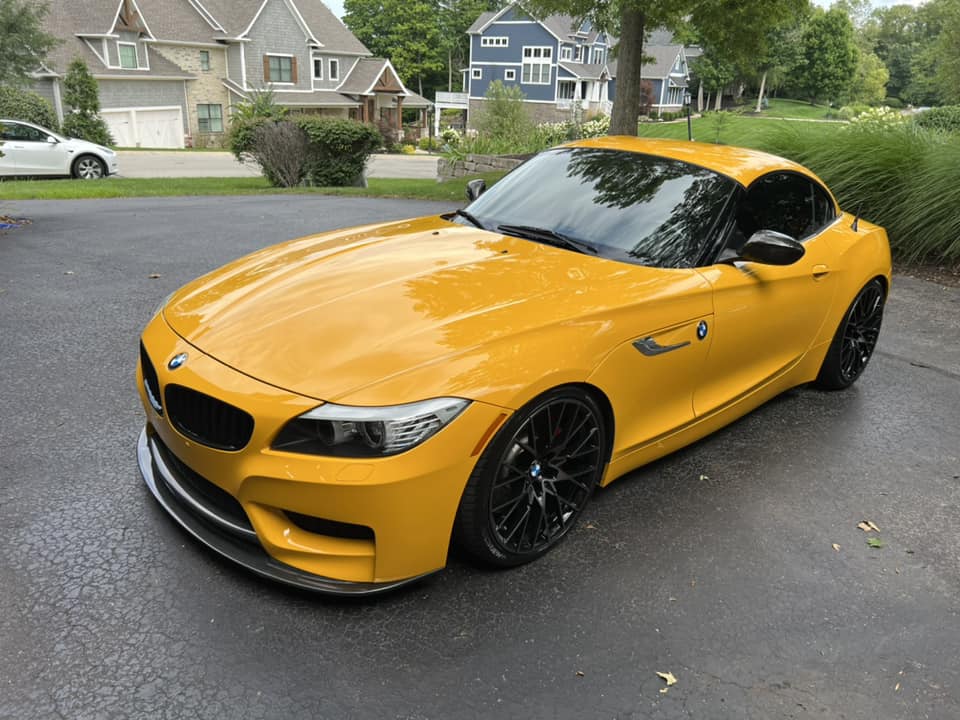
To apply car wax, wash and dry the car, park it in the shade on a cool panel, and spread a very thin coat with a foam applicator or a dual-action (DA) polisher on a soft finishing pad. Let it haze for the time on the label (usually a few minutes; do the finger swipe test), then buff it off with a clean microfiber towel. Do one panel at a time, use less wax than you think you need, and rewax every 1 to 3 months depending on the product.
To apply car wax the right way, wash and dry the car, work in the shade, apply a thin even layer, let it haze, then buff it off with a clean microfiber towel. That is the short version. The details decide whether you get a deep, even shine or a streaky, patchy mess.
This guide shows you how to wax a car properly, by hand or with an orbital buffer. We cover prep, technique, how many coats to use, and the mistakes that ruin a finish. Follow these steps and your waxing will look like a pro did it. Below we also cover hand vs buffer, paste vs liquid vs spray wax, how much to use, how often to wax, and how to fix streaks and wax on trim.
Prep Before You Apply Car Wax
Wax only bonds well to clean, smooth paint. Skipping prep is the top reason wax fails.
- Wash the car with a dedicated car shampoo, not dish soap.
- Dry it fully with a clean microfiber towel or blower.
- Clay bar the paint to pull out bonded contaminants if it feels rough.
- Park in the shade and let the surface cool to the touch.
Never wax a hot or wet panel. Heat makes wax flash and bake on, which leaves streaks. Wax over dirt and you just seal the grime to your paint.
How to Apply Car Wax by Hand
Applying car wax by hand gives you control and works for any wax type. Follow this technique.
- Use a foam applicator pad, not a bare cloth.
- Apply a thin, even layer. More wax does not mean more shine. It just wastes product and gums up.
- Work one panel at a time in straight overlapping lines or small circles.
- Spread it thin enough that the paint still shows through, not a thick white paste.
A thin coat hazes faster and buffs off cleaner. Cover the whole panel before moving on. Hand application takes longer than a machine, but it is forgiving and beginner friendly.
How to Wax With an Orbital Buffer
An orbital buffer speeds up waxing and lays down an even coat. It is ideal for larger vehicles.
- Put a small amount of wax on the foam pad, then dab it across the panel.
- Set the buffer to a low speed. Waxing does not need aggression.
- Move slowly and evenly with light pressure. Let the machine do the work.
- Cover each section with overlapping passes until the panel is coated.
A dual-action orbital is safe for beginners because it will not burn paint like a rotary can. Keep the pad flat. Then let the wax haze before you buff it off by hand or with a clean buffing pad.
Hand vs Buffer: Which Is Better for Applying Wax?
Verdict: for most people, applying by hand is the best way. It's cheap, hard to get wrong, and wax doesn't need machine power to work. A dual-action (DA) polisher on a soft finishing pad mostly saves time and spreads the wax more evenly, which helps on big vehicles (SUVs, trucks, vans) or if you wax often. Never use a rotary buffer or a cutting pad to apply wax. They are for paint correction, not protection.
| By hand | DA polisher / orbital buffer | |
|---|---|---|
| Best for | Beginners, sedans, paste and spray wax | Large vehicles, liquid wax, frequent waxing |
| Tools | Foam or microfiber applicator pad, microfiber towels | DA polisher, soft foam finishing pad, microfiber towels |
| Speed | Slower (about 45 to 90 minutes for a car) | Faster and more even |
| Risk | Very low | Low on DA at low speed; high on a rotary |
| Technique | Thin overlapping straight lines or small circles, one panel at a time | Low speed (about 1 to 3), light pressure, slow crosshatch passes |
Put wax on the pad, not the car. For a buffer, apply 3 to 4 pea-sized dots to the pad and spread them on the panel before turning it on (this keeps it from slinging). Remove the haze by hand with a microfiber towel. A machine is not needed to buff off.
Straight lines or circles? Either works. What matters is a thin, even coat. Many detailers use straight, overlapping passes because any light marks from the applicator are less noticeable than circular swirls.
Can you use a buffer with paste wax? Yes, but load the pad lightly and keep the speed low. Paste is easiest by hand.
Paste vs Liquid vs Spray Wax (and Hard Wax)
All of them protect paint and add shine. The differences are how long they last and how much work they take. For a deeper comparison of two of them, see our guide to spray wax vs paste wax.
| Type | How to apply | Typical durability* | Effort | Best for |
|---|---|---|---|---|
| Paste wax | Lightly swipe the applicator across the tin, thin coat by hand, haze, buff | Several weeks to a few months | Medium to high | Deep gloss, enthusiasts, hand waxing |
| Hard wax (solid/hard paste) | Same as paste; often needs a slightly damp applicator to pick up product | Several weeks to a few months | High | Show-car look; carnauba lovers |
| Liquid wax | Small drops on the applicator or DA pad, thin coat, haze, buff | Often the longest of the three; some hybrids are rated for months | Medium | Best balance of durability and ease; works with a buffer |
| Spray wax | Mist onto a panel or towel, spread, flip to dry side and buff (little or no haze time) | A few weeks | Low | Quick touch-ups and topping an existing wax |
*Durability depends on the product, weather, washing habits and whether the car is garaged. Always follow the label.
Example products (maker pages; not sponsored, not affiliate links):
- Paste: Meguiar's Ultimate Paste Wax. Synthetic paste. Meguiar's says it spreads and wipes off easily, even in full sun.
- Liquid: Meguiar's Ultimate Liquid Wax. Meguiar's says it can go on by hand or with a dual-action polisher.
- Liquid (long-lasting): Collinite No. 845 Insulator Wax. A carnauba-polymer hybrid. Collinite rates it for 4 to 7 months of weather protection and says it works by hand or with a DA at low speed on a finishing pad.
- Spray: Meguiar's Ultimate Quik Wax. A spray wax that Meguiar's says can be used in full sun.
Letting Wax Haze and Buffing It Off
The haze-and-buff stage is where the shine comes from. Timing matters here.
- Wait for the wax to haze. Most waxes need 5 to 20 minutes. Check the label.
- Do the swipe test. Run a finger across the wax. If it smears, wait. If it leaves a clean streak, it is ready.
- Buff with a clean, dry microfiber towel. Flip to a fresh side often.
- Use light pressure and a gentle motion until the panel shines.
Buff too early and you wipe the wax off before it cures. Wait too long and it gets hard to remove. The swipe test takes the guesswork out.
How Much Wax Should You Use?
Much less than most people think. If you can clearly see a thick white film, you've used too much. Extra wax doesn't add protection. You just waste product and end up with streaks.
- Paste or hard wax: one or two light swipes of the applicator across the tin covers about half a hood. The coat should look like a faint haze, and the paint should still show through.
- Liquid wax: 2 to 3 pea-sized drops on the applicator per section (about 2 ft × 2 ft), or 3 to 4 dots on a DA pad per panel. Collinite tells 845 users to use only a couple of small drops per panel and names over-application as the number one cause of problems.
- Spray wax: 1 to 2 sprays per panel, or onto the towel.
- Damp or dry applicator? Start with a clean, dry foam applicator. Some hard waxes go on more easily with a slightly damp applicator. Check the label.
- White car tip: Thin wax is hard to see on white or silver paint. Work in a set pattern (for example top to bottom, left to right) so you don't miss spots or double-coat.
Wax the whole car first, or one section at a time? One panel or section at a time, unless the label says otherwise. On a big car, wax applied first can over-dry before you get back to it, and that's what makes it hard to remove.
How Many Coats of Wax on a Car?
One well-applied coat is enough for most cars. A second coat adds depth and durability.
- One coat: Full protection and a solid shine. Fine for routine maintenance.
- Two coats: Deeper gloss and a bit more longevity. Apply the second after the first fully cures.
- Wait between coats. Most waxes need 1 to 12 hours to cure. Check the product directions.
More than two coats gives little extra benefit. A thin, even coat beats a thick sloppy one every time. Reapply wax every 2 to 3 months to keep protection strong.
How Often Should You Wax a Car (and How Long Does It Last)?
For most daily drivers, wax every 1 to 3 months. Rewax sooner if water stops beading and starts sheeting slowly or sitting flat on the paint.
- Spray wax: every few weeks, or after every 2 to 4 washes.
- Paste or liquid carnauba: about every 1 to 2 months.
- Synthetic or hybrid liquid waxes: often 2 to 6 months. Some, like Collinite 845, are rated for up to 7 months.
- Before winter and before summer: these are the two waxes that matter most if you only wax a couple of times a year.
How to maintain a wax job:
- Wash every 1 to 2 weeks with a pH-neutral car shampoo. Avoid dish soap and "strip" washes.
- Dry with a clean microfiber towel.
- Top up with a spray wax or quick detailer between full waxes.
- Remove bird droppings and bug splatter quickly.
- Park in shade or a garage when you can. UV and heat break wax down faster.
Wax vs Sealant vs Ceramic Coating
| Car wax | Paint sealant | Ceramic coating | |
|---|---|---|---|
| What it is | Natural (carnauba) or synthetic wax | Synthetic polymer protectant | Hard, chemically bonded coating |
| Typical durability | Weeks to a few months | About 4 to 6+ months | Years (product dependent) |
| Look | Warm, deep gloss | Sharp, glassy shine | Glossy and strongly water-repellent |
| Application | Easy DIY | Easy DIY | Needs careful prep; usually paint correction first; often done by pros |
| Cost | Lowest | Low to moderate | Highest |
Can you put wax over ceramic coating? Usually it's not needed, and it can hide the coating's water behavior. Use the coating maker's recommended topper instead. If you're thinking about stepping up from wax, see our best ceramic coating for cars comparison.
Can you wax over a sealant? Yes. Many detailers put sealant on first for durability, then add a carnauba wax on top for gloss, once the sealant has cured (check the label for cure time).
Common Car Waxing Mistakes
A few simple errors ruin most DIY wax jobs. Avoid these and your results jump.
- Waxing in the sun or on a hot panel. This bakes the wax and causes streaks.
- Applying too thick. Heavy coats waste product and are hard to buff off.
- Skipping the wash and clay step. Wax seals in whatever is already on the paint.
- Using dirty or low-quality towels. These cause swirls and smears.
- Buffing at the wrong time. Too early or too late both leave a mess.
- Getting wax on trim. Dried wax stains plastic and rubber. Tape off trim or wipe it fast.
Slow down and keep your coats thin. Most waxing problems trace back to rushing or using too much product.
Can You Wax a Car in the Sun or on a Hot Panel?
Most waxes should go on a cool panel in the shade. On a hot panel the wax flashes too fast, bakes on, and smears instead of buffing clean. Use the back of your hand: if the panel feels warm, wait. Don't wax a wet car with a regular paste or liquid wax either. Dry it completely first.
Exceptions: some products are labeled for use in full sun, for example the Meguiar's Ultimate line above. Even then, a cooler panel is easier to work with. If you must work outside, wax early morning or evening, and work in smaller sections.
How to Fix Streaks, Haze and High Spots
- Streaks or smears right after buffing: too much wax or not enough buffing. Flip to a clean side of the towel and buff again with light pressure. If the residue is heavy, wipe on a little fresh wax to re-soften it, then buff it off right away.
- Hazy or cloudy finish: often the wax was left on too long, or the towel was loaded with wax. Switch to a fresh microfiber towel. A light mist of quick detailer helps lift the residue.
- High spots (dark, oily-looking patches): leftover wax that wasn't fully removed. Mist with quick detailer and buff within minutes. If it has hardened, a second thin coat over the spot, then an immediate buff, usually clears it.
- Wax dried rock-hard: don't scrub. Re-apply a thin layer to re-wet it, wait a moment, then buff.
- Prevention: use thin coats, work one panel at a time, use 2 to 3 clean towels per car, and do the swipe test before buffing.
How to Remove Wax From Black Plastic Trim
Dried wax leaves white, chalky marks on textured black plastic and rubber.
- Prevent it: tape off trim with painter's tape, or wipe any wax off trim right away while it's still wet.
- Fresh residue: use a damp microfiber towel and a soft brush (a soft toothbrush or detailing brush) to work it out of the texture.
- Dried residue: use an all-purpose cleaner diluted for plastics, or a trim-safe cleaner. Agitate with a soft brush, wipe, and repeat if needed.
- Stubborn spots: some detailers use a plain pencil eraser on small marks. Test on a hidden area first.
- Finish: apply a trim protectant or dressing to restore even color.
Also skip wax on matte paint, matte wraps, textured plastics, rubber seals and glass, unless the product says it's safe there.
Want it done for you?
Waxing takes time and the right conditions. Mobile Detailing Expert comes to your home or office, washes and preps the paint, and applies wax or a longer-lasting sealant by hand. See our waxing & sealant service or get a free quote.
Frequently Asked Questions
How do you apply car wax by hand?
Use a clean foam applicator pad and a thin, even layer of wax. Work one panel at a time in straight overlapping lines or small circles. Apply it thin enough that the paint still shows through. Let the wax haze for the time on the label, then buff it off with a clean, dry microfiber towel.
How many coats of wax should you put on a car?
One well-applied coat protects most cars and gives a solid shine. A second coat adds depth and a little more durability, but you must let the first cure first, usually 1 to 12 hours. More than two coats offers little extra benefit. A thin, even coat always beats a thick one.
How long do you let car wax sit before buffing?
Most waxes need 5 to 20 minutes to haze, but always check the label. Use the swipe test to be sure. Run a finger across the wax, and if it leaves a clean streak instead of a smear, it is ready to buff. Buffing too early wipes the wax off before it cures. See detailing packages for pricing and options.
Can you wax a car with an orbital buffer?
Yes, and it lays down a fast, even coat. Use a dual-action orbital on a low speed with a foam pad and light pressure. It is safe for beginners because it will not burn paint like a rotary. Apply a thin layer, let it haze, then buff it off with a clean towel.
What is the most common car waxing mistake?
Waxing in direct sun or on a hot panel is the most common mistake. Heat makes the wax flash and bake onto the paint, which leaves streaks that are hard to remove. Always work in the shade on a cool surface. Applying wax too thick is the second most common error.
How often should you wax your car?
For most daily drivers, wax every 1 to 3 months. Spray waxes need topping up every few weeks. Durable synthetic or hybrid liquid waxes can last several months. Rewax when water stops beading.
Is it better to wax a car by hand or with a buffer?
Hand application is best for most people: it's cheap, safe and gives the same protection. A dual-action polisher on a soft finishing pad at low speed is faster and more even on large vehicles. Avoid rotary buffers for wax.
How much car wax should I use?
A very thin coat. For paste wax, one or two light swipes of the applicator. For liquid, 2 to 3 pea-sized drops per section. For spray, 1 to 2 sprays per panel. A thick white layer means you used too much.
Can you wax a car in direct sunlight?
Most waxes should go on a cool panel in the shade. Heat makes wax dry too fast and streak. Some products are labeled safe for full sun, but a cool panel is still easier.
What's the difference between paste, liquid and spray wax?
Paste gives deep gloss but takes more work. Liquid is easier to spread, works well with a buffer, and is often longer lasting. Spray is the fastest but lasts the shortest time, so it's best for touch-ups between full waxes.
How do you get wax off black plastic trim?
Wipe it off right away if it's fresh. If it has dried, scrub gently with a soft brush and a diluted all-purpose or trim cleaner, then apply a trim protectant. Taping off trim before waxing prevents it.
Car Detailing Near You
AtlantaBaltimoreBirminghamColumbusDallasDenverHuntsvilleIndianapolisJacksonvilleLos AngelesMemphisMinneapolisNew YorkNorfolkOrlandoSan AntonioSan JoseSavannahSeattleTampaTulsaWilmington