
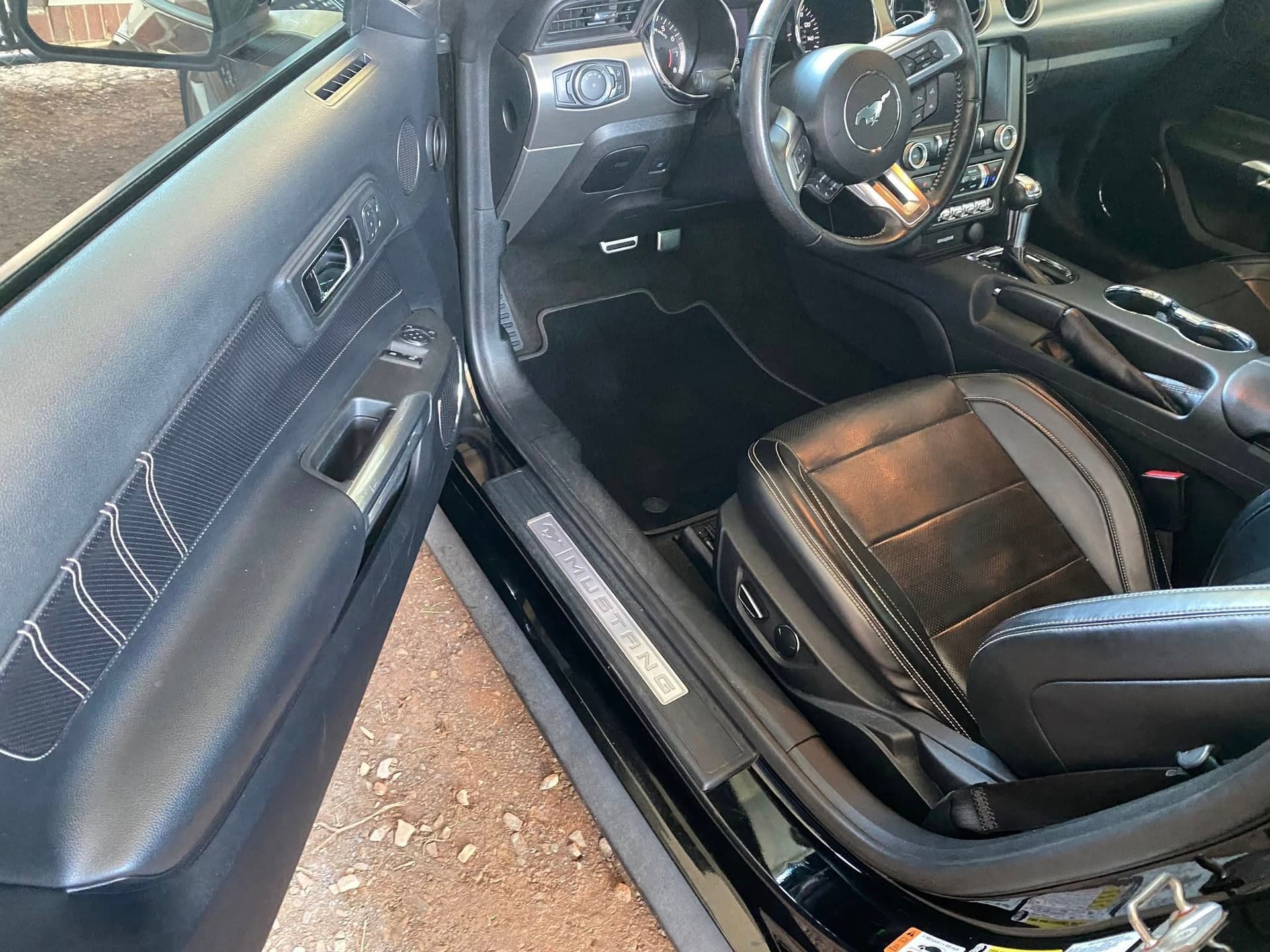
To detail a car interior, empty it, vacuum top to bottom, blow out the vents and crevices, wipe the hard surfaces with a cleaner sprayed onto a cloth, clean the seats and shampoo the carpets, then finish with streak-free glass and a UV protectant on the dash and trim. Work top to bottom, back to front, dry to wet, and plan on 3 to 5 hours your first time.
Work top to bottom, back to front, and dry to wet. Plan on 3–5 hours your first time.
Tools and Products
Vacuum with attachments, detail brushes, microfiber cloths, APC, glass cleaner, interior detailing cleaner, leather cleaner/conditioner if needed, UV protectant.
Interior Detailing Tools Checklist
- Vacuum: a shop vac or a strong cordless, with a crevice tool, an upholstery tool and a soft brush tool
- Brushes: soft detail brushes (for vents, seams and buttons), a stiff carpet brush and a drill brush (optional, for carpets and mats)
- Microfiber: 10 or more general towels, plus 2 waffle-weave or glass towels used only on glass
- Cleaners: an interior all-purpose cleaner (APC) diluted for interiors, an upholstery/carpet cleaner, a leather cleaner and conditioner, and an ammonia-free glass cleaner
- Protection: a non-greasy, matte UV protectant for the dash and trim
- Extras: compressed air or a blower, a rubber pet-hair brush or squeegee, a spray bottle of clean water, a bucket, cotton swabs, and gloves
- Optional: a carpet extractor or steam cleaner, an odor eliminator, and a fan or dehumidifier for drying
The Sequence
- Empty the car completely; remove floor mats.
- Vacuum top-down: headliner, seats, carpets, trunk, crevices.
- Clean vents and crevices with compressed air and brushes.
- Wipe dashboard, console, and door panels (spray on cloth, not surfaces).
- Clean steering wheel, shifter, and high-touch areas.
- Treat pedals and driver footwell.
- Clean cloth seats or leather (clean then condition leather).
- Shampoo carpets and mats; extract moisture fully.
- Clean interior glass last.
- Trunk vacuum and wipe.
- Apply UV protectant; replace mats.
- Final check: open the doors, let the carpets dry fully, and inspect everything in daylight.
The 12 Steps in Detail
Step 1: Empty the car and remove the mats. Remove everything, including the trunk, door pockets, seat-back pockets and under the seats. Take out the mats, then slide the front seats fully forward and back to reach the rails.
Step 2: Vacuum top-down. Brush the headliner lightly with the soft tool (don't press), then vacuum the seats, the seams (pull them open) and the carpets. Agitate the carpet with a stiff brush as you go to lift embedded sand. Do the trunk now or at step 10.
Step 3: Vents and crevices. Blow compressed air into vents, seat tracks, console gaps and around the shifter while the vacuum is running beside them to catch the dust. Use a soft brush on the vent slats.
Step 4: Dashboard, console and door panels. Spray the cleaner onto a microfiber or brush, never onto the dash (overspray gets onto the glass and electronics). Wipe it, then follow with a dry towel. Use a soft brush on textured plastic and around the buttons.
Step 5: High-touch areas. The steering wheel, shifter, door handles, window switches and seatbelt buckles hold the most body oil. Clean them with an interior cleaner on a towel. Never use a dressing on the steering wheel, pedals or shifter, because they must not be slippery.
Step 6: Pedals and the driver footwell. Scrub the pedals and the heel pad area of the carpet with a stiff brush. This is the dirtiest spot in most cars.
Step 7: Seats. Cloth: spot-treat the stains, then shampoo (see "Cloth Seats and Stains"). Leather: clean, then condition (see "Leather Seat Care").
Step 8: Carpets and mats. Shampoo or extract them, then dry them fully (see "Carpet and Floor Mats").
Step 9: Interior glass. Clean the glass last so the dust and overspray from the other steps don't land on it (see "Streak-Free Interior Glass").
Step 10: Trunk. Vacuum and wipe the trunk, the sill and the spare-tire area.
Step 11: UV protectant and mats. Apply a matte UV protectant to the dash, door panels and trim. Put the mats back only once they and the carpet are dry.
Step 12: Final check. Leave the doors or windows open, or run a fan, until the carpets are completely dry, so they don't smell musty. Check the glass for streaks and the seats for missed spots in daylight.
Pro Interior Detailing Tips
These are the car interior detailing tips that make the biggest difference:
- Dry to wet. Vacuum and air-blow everything before using any liquid. Wet dust turns into mud in the seams.
- Spray the towel, not the surface. This keeps cleaner off the glass, screens and electronics.
- Use less water. Over-wet seats and carpets take a long time to dry and can smell musty or grow mold.
- Test first. Try every cleaner on a hidden spot (under a seat or inside the glovebox).
- Brush, then wipe. A soft brush lifts dirt out of the texture and stitching that a towel just glides over.
- One towel per job. Keep separate towels for glass, leather, plastics and dirty areas like the pedals.
- Nothing slippery. No glossy dressing on the steering wheel, pedals, shifter or seats.
- Go matte. A matte UV protectant looks factory-fresh and doesn't glare on the windshield.
- Screens are delicate. Use a dry microfiber, or one lightly dampened with water. Never use an APC or glass cleaner on them.
- Work in shade with the doors open so products don't dry too fast and the cabin stays ventilated.
- Do one area completely (seat, floor, door) before moving on, so nothing gets missed.
Keeping It Clean Between Details
A 20-minute weekly vacuum and wipe extends time between professional details. Treat new stains immediately. The three jobs below are the ones that show up most between full details: leather upkeep, drink spills, and pet hair.
Leather Seat Care
Leather needs cleaning and conditioning as two separate steps, not one. Clean first with a dedicated leather cleaner to lift dirt and oils, then condition to replace moisture the cleaning step removes. Skipping conditioning is what leads to cracking over time, cleaning alone actually accelerates dryness if it's never followed up. Condition every few months depending on climate and sun exposure, more often in hot, dry, or high-UV conditions.
Removing Coffee and Drink Stains From Upholstery
Blot fresh spills immediately, don't rub, rubbing pushes the stain deeper into fibers instead of lifting it out. For cloth upholstery, a mix of mild dish soap and water usually handles a fresh coffee stain; for set-in stains, an upholstery-specific stain remover works better than household cleaners. On leather, wipe immediately with a damp cloth and follow with leather cleaner, never let coffee sit on leather, since the acidity can stain the material permanently if left too long.
Cloth Seats and Stains
- Vacuum the seats thoroughly, including the seams.
- Spot-treat the stains (see the chart below), letting the cleaner dwell for a minute.
- Lightly mist the whole seat with an upholstery cleaner and agitate it with a soft brush. Clean whole panels so you don't leave water rings.
- Blot with a clean microfiber, or extract it with a wet vac or extractor.
- Let it dry with the doors open or a fan running.
| Stain | What to use | Tip |
|---|---|---|
| Coffee, soda, juice | Mild soap and water, then an upholstery stain remover | Blot, don't rub; work from the outside in |
| Grease, food, makeup | An upholstery cleaner or diluted interior APC | Repeat light passes instead of one wet one |
| Ink | Isopropyl alcohol dabbed on with a cotton swab (test first) | Blot only; it spreads if you rub |
| Mud | Let it dry fully, brush and vacuum, then clean | Wet mud smears deeper |
| Blood | Cold water and an upholstery cleaner | Never use hot water, which sets it |
| Pet accidents and vomit | An enzyme cleaner | Enzymes break down the odor source |
| Gum | Freeze it with ice, then pick or scrape it off | Clean the residue afterward |
| Water rings | Re-clean the whole panel evenly | Rings come from spot cleaning one small patch |
Product example (checked on the maker's page): Folex Instant Carpet Spot Remover is water-based and works on colorfast carpet and upholstery that can be dampened. Test on a hidden spot first.
Carpet and Floor Mats
- Rubber or all-weather mats: take them out, scrub them with an APC and a stiff brush, rinse and dry them. Don't dress them, because a slippery mat under the pedals is dangerous.
- Carpet mats: shake and beat them, vacuum, spot-treat, then shampoo or extract. Dry them fully before refitting.
- Car carpet: vacuum while brushing to lift sand, pre-treat the stains, then shampoo with a brush and extract with a wet vac or carpet extractor. Rinse-extract with clean water so no soapy residue is left to attract dirt.
- Drying: open the doors, run a fan, or use the car's heater with the windows cracked. Damp carpet is the most common cause of musty smells after a DIY detail.
Dashboard, Vents and Plastics (With UV Protectant)
- Dust first with a soft brush or dry microfiber.
- Clean with an interior cleaner sprayed onto the towel. Use a soft brush on textured plastic, around the buttons and on the cup holders.
- Vents: use compressed air, then a soft detail brush or a foam swab on each slat.
- Cup holders and crevices: use a damp towel wrapped around a brush handle, cotton swabs, or a soft brush. Remove any rubber cup-holder inserts and wash them.
- Dry-wipe everything.
- Protect it with a non-greasy, matte UV protectant on the dash, door panels and plastic trim. Wipe it on with an applicator, then buff off the excess. Keep it off screens, gauge covers and the steering wheel.
Product example (checked on the maker's page): 303 Aerospace Protectant is made for dashboards, door panels and trim. It's water-based, silicone-free and dries to a matte finish. The maker says not to use it on clear plastics, gauge panels or headlights.
Streak-Free Interior Glass
- Use an ammonia-free glass cleaner (ammonia can damage window tint).
- Spray the towel, not the glass, so you don't hit the dash.
- Wipe with one glass towel in one direction (side to side), then buff dry with a second clean, dry towel in the other direction (up and down). This shows which side any streak is on.
- Lower the windows an inch to clean the top edge.
- Reach the bottom of the windshield with the back of your hand on the towel, or use a windshield wand.
- Smoke or plasticizer film (the haze inside the windshield) may need two passes.
Product example (checked on the maker's page): Stoner Invisible Glass is ammonia-free and tint-safe.
Removing Pet Hair From Car Interiors
A standard vacuum nozzle often just pushes pet hair around instead of lifting it. A rubber squeegee or a damp rubber glove dragged across upholstery bunches hair into removable clumps far more effectively than suction alone. For carpet, a stiff-bristle brush breaks up embedded hair before vacuuming. Regular vacuuming between full details keeps hair from working deeper into fabric weave over time, where it becomes much harder to remove.
How to Clean a Car Headliner Safely
The headliner fabric is glued to a foam backing, and too much moisture can loosen the glue and make it sag.
- Vacuum lightly with a soft brush attachment.
- Spray an upholstery cleaner onto a microfiber towel, never onto the headliner.
- Dab or gently wipe the stain in one direction. Don't scrub.
- Blot with a dry towel and let it air-dry.
If it's already sagging or the stain is large, a pro can clean it more safely with low-moisture tools.
Odor Removal
- Find and remove the source: food under the seats, spilled milk, pet accidents, damp carpet or a wet trunk.
- Deep clean the fabric: shampoo or extract the seats and carpets, using an enzyme cleaner on organic odors.
- Dry everything completely. Moisture keeps odors alive.
- Replace the cabin air filter if the smell comes from the vents (see the owner's manual for where it is).
- Treat what remains: an odor eliminator, baking soda left on the carpet overnight and then vacuumed, or activated charcoal bags.
Air fresheners only mask smells. Smoke odor and mildew often need professional treatment, such as steam or extraction plus an odor treatment.
Steam Cleaning and Hot Water Extraction
- Steam cleaning uses low-moisture, high-heat vapor to loosen grime and sanitize surfaces: seats, carpets, cup holders, vents and seat tracks. It's great on sticky consoles and for killing odor bacteria, because it adds very little water.
- Hot water extraction sprays hot water and cleaner into fabric and immediately vacuums it back out. It's the best way to deep-clean dirty seats and carpets, and it's what most pros use.
- Use caution on leather (only brief, indirect steam), the headliner (low moisture only), and around screens and electronics (don't steam them).
- Always vacuum before steaming or extracting, and dry the cabin afterward.
Should You DIY This or Hire a Professional?
DIY interior cleaning can produce a noticeably cleaner cabin when done well: vacuuming, wiping hard surfaces, cleaning glass, and light spot treatment. Professional detailing goes deeper: hot water extraction, odor remediation, headliner-safe cleaning, and vent work that home tools rarely match.
- DIY makes sense for maintenance on a relatively clean car between details.
- Hire a pro for heavy soiling, odors, sale prep, lease turn-in, or when you want a true reset without spending a full day.
Carpet extraction, set-in stains, and odor treatment are the usual limits of a home vacuum and spray bottle. The hybrid approach works best: a professional interior detailing once or twice a year, with DIY maintenance between.
How Often Should You Detail Your Car Interior?
- Weekly or every two weeks: a quick vacuum and wipe-down (the 20-minute routine above).
- Every 3 to 4 months: a full interior detail for most drivers.
- Every 1 to 2 months: if you have kids, pets, a long commute, or you eat in the car.
- Leather: condition it every few months (more often in hot, sunny climates like the Southeast).
- Before selling, turning in a lease, or after a spill or odor problem: a full professional detail.
More on scheduling: How Often Should You Detail Your Car?
How Much Does Interior Detailing Cost?
The price of a professional interior detail depends on:
- the vehicle's size (a coupe vs a 3-row SUV or van),
- its condition (light dust vs heavy soiling, sand, stains or pet hair),
- extras like stain extraction, odor treatment, leather conditioning or headliner work.
A DIY detail mostly costs time (3 to 5 hours) plus the supplies in the checklist above. For an exact price on your car, see our interior detailing service and get a free quote.
Should You Detail Before or After Seat Reupholstery?
Do both: detail the interior before the work and lightly after it.
- Before: vacuum and clean the carpets, dash and door panels before the car goes to the upholsterer. Removing the seats kicks up dirt, and old grime can transfer to the new fabric or leather.
- After: once the new upholstery is fitted, vacuum the new debris (foam, thread, fabric dust) and wipe the hard surfaces. Clean the new seats only with the cleaner the upholsterer recommends, and wait for any adhesives to cure (ask them how long).
- Don't shampoo the carpets right before the seats are reinstalled unless they're fully dry.
Frequently Asked Questions
How often should I condition leather car seats?
Every few months for most cars, and more often in hot, dry, or high-UV climates. Always clean first, then condition. Cleaning alone without conditioning leaves leather drier than before.
What's the fastest way to handle a fresh coffee spill in the car?
Blot immediately with a clean cloth, don't rub. On cloth, follow with mild dish soap and water or an upholstery stain remover for set-in spots. On leather, wipe with a damp cloth, then use a dedicated leather cleaner before the acidity sets a permanent stain.
Why doesn't vacuuming remove pet hair well?
Hair hooks into fabric and static holds it down, so suction alone often just moves it. Loosen it first with a rubber squeegee or damp rubber glove, then vacuum the clumps.
What are the best car interior detailing tips?
Work dry to wet and top to bottom, spray cleaner onto the towel rather than the surface, use as little water as possible on fabric, test products on a hidden spot, use brushes on textured areas, and finish with a matte UV protectant. Never put slippery dressings on the wheel, pedals or seats.
What order should you detail a car interior in?
Empty the car, vacuum everything top-down, blow out the vents and crevices, clean the hard surfaces, then the seats, then the carpets and mats, and do the glass last. Many pros finish one area (a door, a seat and its floor) completely before moving on, which also works as long as you go top to bottom within each area.
Should I detail my car before or after seat reupholstery?
Both: clean before, so old dirt doesn't transfer to the new material, and do a light clean afterward to remove the debris from the install. Use only the upholsterer's recommended cleaner on the new seats.
How do you clean black leather seats full of dog hair?
Hair doesn't weave into leather, so a vacuum with a soft brush, followed by a damp microfiber or a rubber glove, picks it up easily. Then clean with a leather cleaner and condition it. Black leather shows residue, so buff it with a dry towel at the end.
Should you vacuum before steam cleaning or extraction?
Yes. Always vacuum thoroughly first. Steam or extraction turns loose dirt and sand into mud. Keep the headliner to low-moisture cleaning only.
How is leather cleaned and conditioned during a mobile detail?
The detailer vacuums the seams, applies a pH-balanced leather cleaner with a soft brush, wipes it off, and then applies a conditioner and buffs it dry so the seats aren't slick.
Can I detail my car interior at home myself?
Yes. With a vacuum, brushes, microfiber towels and the right cleaners, you can follow the 12 steps above in 3 to 5 hours. Heavy stains, odors and deep carpet cleaning are where a professional with an extractor does much better.
Want it done for you?
Our mobile detailers come to your home or office with water, power and extraction tools for a full interior reset: seats, carpets, stains, odors, pet hair, leather and glass. See interior detailing or get a free quote.
Interior Detailing Near You
AtlantaBaltimoreBirminghamColumbusDallasDenverHuntsvilleIndianapolisJacksonvilleLos AngelesMemphisMinneapolisNew YorkNorfolkOrlandoSan AntonioSan JoseSavannahSeattleTampaTulsaWilmington