
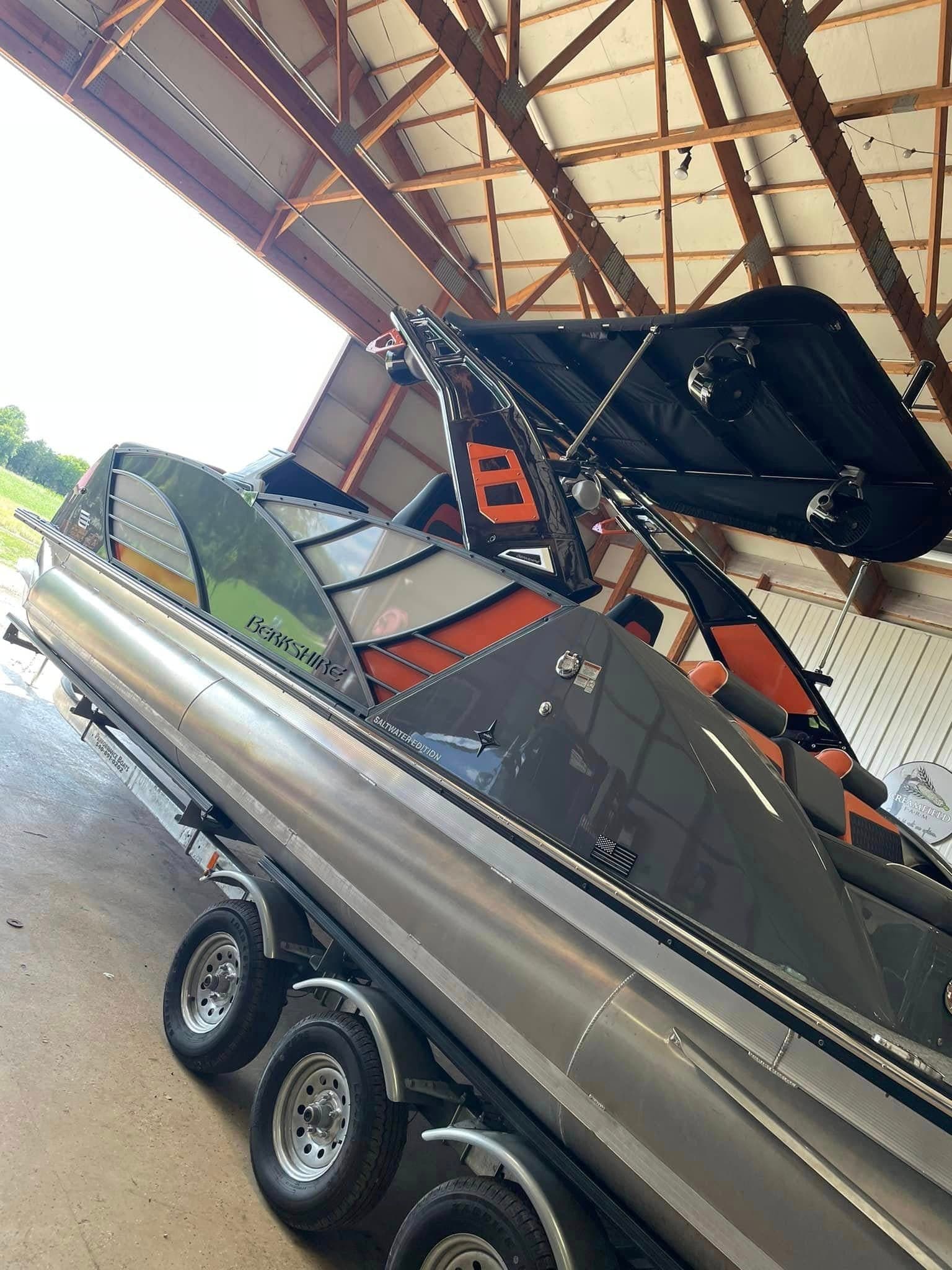
A boat waterline stain is the brown or yellow line that forms where your hull sits in the water. It comes from minerals, algae, oil film, and scum that bake onto the surface. Removal method depends partly on your hull material: gelcoat and aluminum need different cleaners, since an acid strong enough for gelcoat can pit or discolor bare aluminum. This guide covers what causes the line, how to remove it on both surface types, and how to keep it from coming back.
What Causes the Waterline Stain and Scum Line?
The waterline stain forms where your hull meets the water and collects everything floating in it. Here's what creates the line:
- Minerals: Hard water and salt leave mineral deposits as water evaporates.
- Algae and slime: Organic growth clings to the hull at the waterline.
- Oil and fuel film: Surface scum in marinas sticks to the hull.
- Tannins: Tea-colored water in some lakes and rivers stains hulls brown.
The scum line is baked-on, not loose dirt, which is why soap and a sponge never remove it on their own. The stain bonds to the surface, so it needs a chemical cleaner to break that bond before it wipes off.
Gelcoat vs. Aluminum: Why Hull Material Changes the Cleaner
Fiberglass boats have a gelcoat surface. Pontoon boats and many aluminum-hulled fishing boats have bare or painted aluminum. The two need different cleaning approaches.
On gelcoat, an acid-based marine hull cleaner is the standard fix. Gelcoat tolerates properly diluted acid cleaners well when they're rinsed promptly and not left to dry.
On aluminum, the same strong acid formulas made for gelcoat can pit, discolor, or etch the metal, especially on unpainted or anodized surfaces. Aluminum needs a cleaner specifically labeled safe for aluminum hulls, typically a milder, aluminum-safe acid or a non-acid oxidation remover. Test in a small, hidden spot first, and never use a gelcoat-strength acid cleaner on bare aluminum without confirming the label says it's aluminum-safe.
If you're not sure which surface you have, check for a painted or gel-like finish (gelcoat) versus a visible metal sheen or rivets (aluminum). When in doubt, a milder aluminum-safe product is the safer starting point on either surface.
What Types of Stains Can a Hull Cleaner Actually Remove?
Not every hull cleaner handles every stain type, which is why a single all-purpose product sometimes underperforms.
- Mineral and scum buildup: handled by standard acid-based hull cleaners on gelcoat, or aluminum-safe formulas on metal hulls.
- Tannin browning: needs an oxalic acid cleaner specifically, since general hull cleaners often don't fully lift tea-colored staining.
- Rust streaks: from fittings or trailer hardware, also respond best to oxalic acid or a dedicated rust remover.
- Algae and organic growth: needs both a cleaner to break the bond and physical agitation with a soft pad; chemical alone often isn't enough.
Matching the cleaner to the stain type matters more than finding one "best" product. A cleaner that's excellent on mineral scum may barely touch a tannin stain, and vice versa.
How to Remove Waterline Stains From a Boat
- Rinse the hull. Clear loose dirt and let the surface cool if it's hot.
- Wear protection. Acid cleaners need gloves and eye protection.
- Confirm the cleaner matches your hull material. Gelcoat-strength acid on bare aluminum risks pitting the metal.
- Apply the cleaner. Wipe or spray it onto the stained waterline.
- Let it dwell. Give it 30 seconds to a few minutes. Watch the stain lift.
- Agitate lightly. Use a soft pad or sponge on stubborn spots.
- Rinse thoroughly. Flush all cleaner off the hull and surrounding area.
- Repeat if needed. Heavy lines may take a second application.
Never let acid cleaner dry on the hull, on gelcoat or aluminum. Drying is what causes etching and pitting. Work in sections, keep it wet, and rinse fully before moving on. See detailing packages for pricing and options.
How to Clean Algae Off a Boat Hull
Algae needs both physical removal and a cleaner that breaks down the organic growth. Boats kept in the water grow algae fast at and below the waterline.
- Pressure rinse first. Knock off the loose, slimy top layer.
- Apply a hull cleaner matched to your hull material.
- Agitate gently. A soft pad clears what the rinse missed.
- Rinse and inspect. Repeat on any remaining green or brown patches.
Below-the-waterline growth is its own job. Bottom paint and heavy marine growth need hauling out and specialized cleaning. The waterline algae and scum, though, come off with the right hull cleaner from the dock or trailer.
How to Remove Tannin and Rust Stains
These need a different acid than general scum removal.
- Tannin stains: tea-colored browning from leaves and organic water. An oxalic acid cleaner, used at an aluminum-safe dilution if that's your hull material, pulls them out.
- Rust stains: orange streaks from fittings, fasteners, or trailer parts. Oxalic acid or a dedicated rust remover works best, again checked against your hull material first.
Apply, let it dwell, and rinse well. Stubborn rust may need a second pass and light agitation.
How to Keep the Scum Line From Coming Back
- Wax or coat the waterline. A protected, slick surface lets scum rinse off instead of bonding.
- Wipe the line often. A quick wipe each trip stops buildup from baking on.
- Use a ceramic coating. A coated hull resists staining far longer than bare gelcoat or aluminum.
- Rinse after every outing. Especially in saltwater or scummy marinas.
Once scum bonds to a bare, unprotected surface, it takes a chemical cleaner to remove. On a waxed or ceramic-coated hull, the same scum often wipes off with a sponge. Protection turns a hard job into an easy one.
Frequently Asked Questions
Can I use the same hull cleaner on an aluminum pontoon boat as on a fiberglass boat?
Not always. Gelcoat-strength acid cleaners can pit or discolor bare aluminum. Check the label for aluminum-safe formulation before using any hull cleaner on a pontoon or aluminum-hulled boat, and test a hidden spot first if you're unsure.
What's the difference between an acid cleaner and an oxalic acid cleaner?
General acid-based hull cleaners handle mineral scum and algae residue well. Oxalic acid is a specific type that's notably better at tannin browning and rust staining, which general-purpose cleaners often can't fully lift on their own.
Will hull cleaner damage my gel coat or aluminum?
Both surfaces are safe with the right product used correctly. The risk in both cases is letting the cleaner dry on the surface, which etches gelcoat and can pit aluminum. Keep the surface wet, work in sections, limit dwell time, and rinse completely.
How do I stop the waterline stain from coming back?
Protect the surface and clean it regularly. Wax or ceramic coat the hull so scum can't bond to bare gelcoat or aluminum. Wipe the waterline after each trip and rinse after every outing, especially in saltwater. A protected surface lets most scum rinse off with a sponge instead of needing a chemical cleaner.
How do I know which stain type I'm dealing with?
Color is the main clue. Brown or tea-colored staining is usually tannin. Orange streaking near fittings or hardware is usually rust. A dull, chalky brown or green line right at the waterline is typically mineral and algae buildup, the most common combination. When stains mix, an oxalic acid product generally handles the widest range.
Tired of Fighting the Scum Line Yourself?
We remove waterline stains and scum, matched to your hull material, then seal the surface through our boat detailing service, including ongoing marina programs for docked boats.
Boat Detailing Near You
AtlantaBaltimoreBirminghamColumbusDallasDenverHuntsvilleIndianapolisJacksonvilleLos AngelesMemphisMinneapolisNew YorkNorfolkOrlandoSan AntonioSan JoseSavannahSeattleTampaTulsaWilmington