
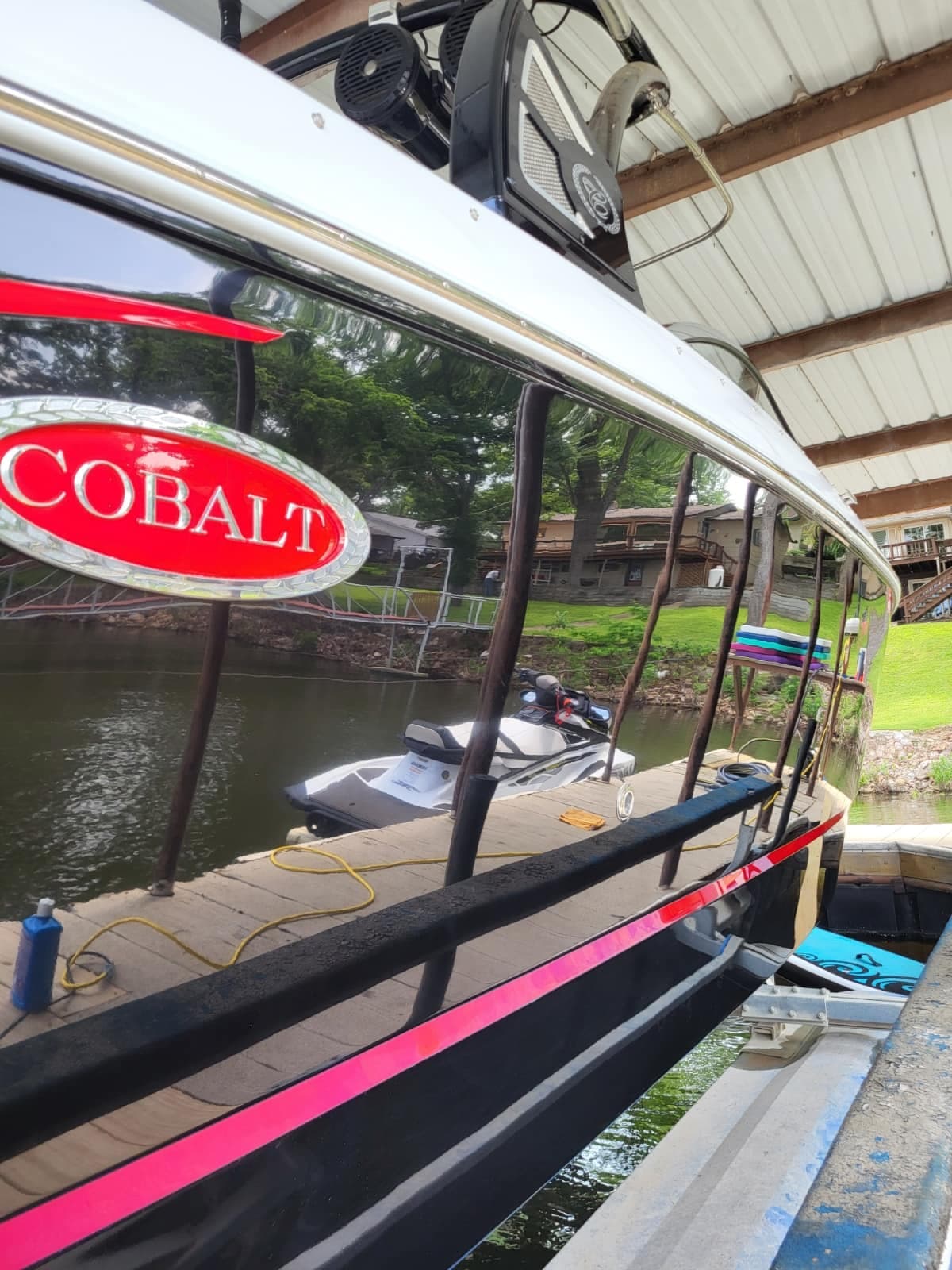
Boat oxidation removal restores a chalky, faded gel coat back to a deep, wet-looking gloss. Oxidation is the dead, dull top layer that forms when sun and salt break down fiberglass. You remove it by compounding the surface, polishing out the haze, then sealing the fresh gel coat. Once that's done, the surface needs real protection, and your interior needs its own separate care routine. This guide covers all three: removing oxidation, choosing between ceramic coating and wax for lasting protection, and keeping upholstery and marine vinyl from cracking or staining.
What Causes Gel Coat Oxidation?
Gel coat oxidation is sun and weather slowly destroying the outer shell of your fiberglass hull. Understanding the cause tells you how to fix it and prevent it.
- UV exposure: Sunlight degrades the resin in the gel coat, leaving a chalky surface.
- Salt and minerals: Salt water and hard water etch and dry the surface.
- No protection: A hull without wax or sealant oxidizes far faster.
- Neglect: Months of dirt and water film accelerate the breakdown.
Oxidation always starts at the surface. Gel coat is thicker than most owners think, often 15 to 30 mils, which is why even badly faded hulls can usually be saved. You're only removing the dead top fraction.
How to Tell How Bad the Oxidation Is
Knowing the severity tells you how aggressive to get with your products. Too little cut wastes time. Too much removes gel coat you can't get back.
- Light oxidation: A slight haze. Your hand stays mostly clean when you rub it. A polish alone may fix it.
- Medium oxidation: Visible dullness and chalk on your hand. Needs a medium compound.
- Heavy oxidation: Thick, white, chalky film. Needs a heavy-cut compound, sometimes wet sanding first.
Test a small, hidden spot near the stern before committing to a full hull. If a polish brings the gloss back, you avoid heavier compounding altogether.
Step-by-Step: How to Remove Oxidation From Boat Gel Coat
- Wash and dry. Strip all dirt, salt, and old wax so abrasives cut clean.
- Tape off trim. Protect rubber, decals, and waterline stripes.
- Compound. Work a marine compound with a polisher in small sections until gloss returns.
- Wipe and inspect. Remove residue and check the gloss in good light.
- Polish. Follow with a finer polish to clear compound haze and deepen the shine.
- Clean the surface. Wipe with an isopropyl alcohol mix to strip oils before sealing.
- Seal it. Apply marine wax, a synthetic sealant, or a ceramic coating.
Never stop at the compound step. Bare, freshly cut gel coat oxidizes faster than ever because it has zero protection. Sealing is what makes the work last, which brings up the next real decision: what to seal it with.
Best Gel Coat Oxidation Remover: What Actually Works
- Dedicated marine oxidation removers: Liquid compounds built for gel coat. Good for medium oxidation.
- Heavy-cut compounds: Aggressive abrasives for thick, chalky hulls.
- Polishes: Fine abrasives for light haze or finishing after compound.
- Wet sanding (1000 to 2000 grit): A last resort for severe oxidation before compounding.
Avoid acid wash shortcuts on oxidation. Acid hull cleaners handle waterline stains, not oxidation. They don't restore gloss and can dry the gel coat further.
When Oxidation Is Too Far Gone
- Color change to the fiberglass: If you see the weave or a darker base, you've cut through.
- Gloss won't return: After compounding, the surface stays dull and porous.
- Cracking or crazing: Spider cracks mean the gel coat itself is failing.
At that point, the hull needs new gel coat or paint. Polishing a worn-through hull only thins it more. We always test a section first before quoting a full job, and we'll tell you honestly whether compounding will work.
Ceramic Coating vs. Wax for Boats
Once oxidation is gone, bare gel coat needs protection, and this is the real choice: how long you want that protection to last.
Wax:
- Lasts 2 to 4 months
- Lower upfront cost, roughly $30 for a quality product
- Sits on top of the surface rather than bonding to it
- Reapplication is a routine, ongoing task
Ceramic coating:
- Lasts 2 to 4 years, roughly 10 to 20x longer than wax per application
- Chemically bonds to the gel coat and cures into a hard, glass-like shell
- Stronger resistance to UV, salt, and chemical etching
- Requires the hull be fully corrected and clean before application, since any wax or contamination underneath prevents proper bonding
- Priced by boat length: typically $40 to $80 per foot for the coating itself, plus prep. A 24-foot boat with an oxidized hull often runs $960 to $1,920 total.
That ceramic price looks steep next to a $30 bottle of wax, but spread over 3 years of protection versus 10 to 20 wax applications over that same period, the yearly cost is competitive, and you're not the one doing the reapplying.
The honest tradeoff: wax is the right call if you're not ready for the upfront ceramic investment or plan to sell soon. Ceramic makes more sense if you're keeping the boat long term and would rather stop rewaxing every few months. We prep and apply marine coatings through our boat detailing and ceramic coating services.
Caring for Boat Upholstery and Marine Vinyl
Your hull isn't the only surface fighting sun and salt. Upholstery and marine vinyl need their own routine, separate from hull care, since standard soap and generic cleaners do real damage over time. The job has three parts: clean the surface, treat mildew in the seams, then condition the vinyl so UV and mold don't undo the work.
- Rinse after every outing. Fresh water clears salt and dirt before it has a chance to sit and dry into the material.
- Use a dedicated marine vinyl cleaner, never dish soap or bleach. Household cleaners strip the factory UV protection built into marine-grade vinyl. Also skip acetone, alcohol, magic erasers, and stiff brushes, which scratch or strip the topcoat and make staining worse.
- Work the seams with a soft brush. Mildew lives in the stitching and pores, not just on the face of the vinyl. A quick wipe never fully solves it.
- Kill mildew with a marine mildew remover, not bleach. Spray seams, let it dwell 1 to 5 minutes without drying, scrub gently, wipe, and repeat on heavy spots. For deep-set mildew, a pro uses a hot-water extractor to pull it from the seams.
- Watch for pink stains on white seats. Pink staining comes from bacteria inside the foam, not on the surface, so it needs a specialized pink-stain treatment, not a general cleaner.
- Apply a UV protectant after cleaning. Condition every 4 to 6 weeks in season. This is the step most owners skip, and it's the one that actually slows fading and cracking long-term.
- Ventilate below-deck cushions. Prop cushions up or remove them when the boat isn't in use so moisture doesn't trap and breed mildew. A breathable cover beats a sealed plastic one.
- Address small cracks and stains immediately. A small crack left alone spreads under continued UV and flex stress, and becomes a full seam repair instead of a wipe-down fix.
With consistent care, marine-grade vinyl can hold up 5 to 10 years. Skipping protectant and using the wrong cleaners is the single fastest way to cut that lifespan down.
Frequently Asked Questions
How do I remove oxidation from boat gel coat by hand?
You can remove light oxidation by hand, but it's slow and tiring. Apply a marine oxidation remover or polish to a foam pad and work small sections in circles with firm pressure. For medium or heavy oxidation, hand work rarely cuts enough, a dual-action polisher does the job faster and more evenly without burning the surface.
Will heavy oxidation come back after I remove it?
Yes, if you don't protect the surface. Compounding exposes fresh, unprotected gel coat that oxidizes faster than before. Always seal restored gel coat with wax, a synthetic sealant, or a ceramic coating.
Is ceramic coating worth it for a boat I only use occasionally?
It depends on how long you're keeping the boat, not how often you use it. A boat that sits outside between uses still takes the same UV and weather damage whether it's on the water or on a trailer. If you're keeping it multiple seasons, ceramic's multi-year protection still pays off even with light use.
Can I use regular car wax or car interior cleaner on my boat?
Not ideally. Marine gel coat oxidizes differently than automotive clear coat, and marine vinyl needs UV protection car interior products don't provide. Marine-specific products are formulated for the salt, sun, and moisture exposure a boat actually faces.
How long does gel coat restoration last?
The restoration itself is permanent, you removed the dead layer for good. How long the gloss lasts depends entirely on protection: 3 to 4 months under wax, 2 to 4 years under a ceramic coating, or a matter of months if left completely unsealed.
Ready to Bring Back the Shine and Keep It There?
Our crew brings professional compounding, polishing, and ceramic coating gear to your boat, plus proper upholstery care so the whole boat gets the same level of attention. We test a section first, then handle the rest through boat detailing and cut and buffing.
Boat Detailing Near You
AtlantaBaltimoreBirminghamColumbusDallasDenverHuntsvilleIndianapolisJacksonvilleLos AngelesMemphisMinneapolisNew YorkNorfolkOrlandoSan AntonioSan JoseSavannahSeattleTampaTulsaWilmington