
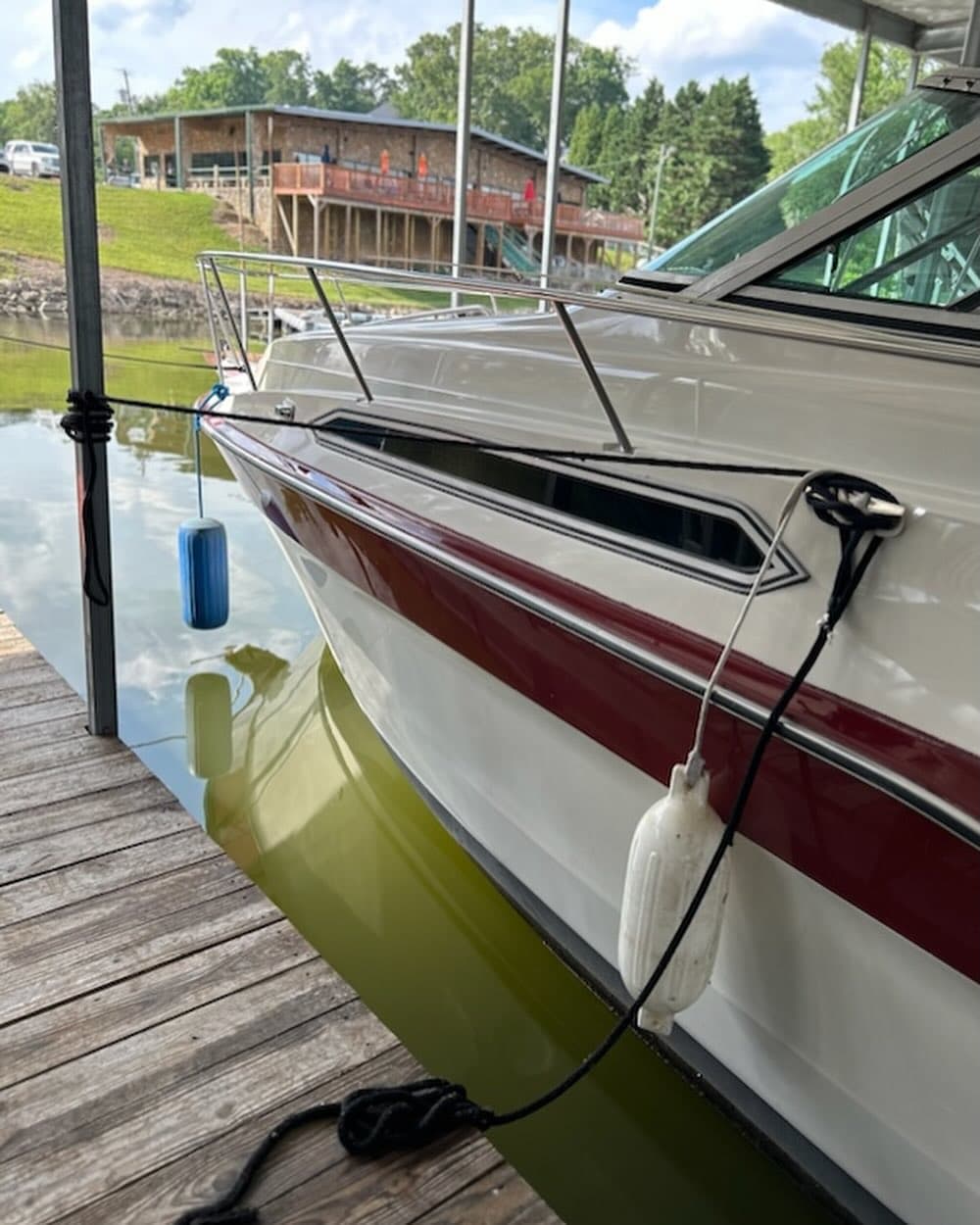
To winterize a boat, get the water out of every place it can freeze, or replace that water with the right antifreeze, then protect the engine from corrosion and stale fuel. BoatUS and GEICO Marine claim files show more than three-quarters of freeze claims are cracked blocks or exhaust manifolds because water stayed in the engine. The owner’s manual for your engine is the procedure. This page is the sequence most trailerable boats follow, plus the plumbing people skip.
A space heater in the engine room is not winterizing. Power fails in the same storm that freezes the block.
Difficulty: Moderate for a trailerable outboard. Harder for an inboard or I/O with a raw-water circuit. Time: 1–3 hours for a small outboard boat. Half a day if you also do freshwater, head, and a cover. When: Before the first hard freeze. Boats stored on land freeze sooner than boats in the water. Unless you are in a place that never freezes (BoatUS cites the Keys / Hawaii as the usual exceptions), winterize if the boat will sit for weeks.
Safety
- Never run an engine without a water supply (muffs, a flush port, or the boat in the water). A dry impeller dies in seconds.
- Gasoline work: no smoking, tank vents open as the manual says, spill pads in the bilge.
- Use propylene glycol (pink, marine/RV, non-toxic) in raw-water circuits, freshwater plumbing, and the head. Do not put automotive ethylene glycol (the green or orange Prestone-type coolant) in a drinking-water system or dump it overboard. That chemical is highly toxic. BoatUS: it cannot be reliably purged from a potable system in the spring.
- Antifreeze labeled −50 F is not safe to −50 F in a real hose. Residual water dilutes it. West Marine and BoatUS both say the burst protection is much warmer than the marketing number. Use a rating well below your worst night, often the −100 F marine jugs in cold states, and run enough volume that pink comes out the far end for a good 30 seconds.
- Do not shrinkwrap the boat yourself. BoatUS documents fires from DIY shrinkwrap guns. Hire that part.
- A heater is not a plan. BoatUS claim files include boats that burned when the extension cord shorted, and boats that froze when the ice storm killed the power.
Tools and materials
- Engine, drive, and boat owner’s manuals
- Marine fuel stabilizer (gasoline) or the diesel treatment your manual names
- Fogging oil made for storage (or the OEM winterize mode on some EFI outboards)
- Oil, oil filter, gear lube, and fuel filter your engine actually specifies
- Flush muffs or the engine’s garden-hose flush fitting
- Non-toxic propylene glycol antifreeze, several gallons (engine + plumbing). Do not dilute.
- Five-gallon bucket (inboard / I/O raw-water feed)
- Lower-unit lube pump
- Spark-plug socket if you fog through the holes
- Water-heater bypass fittings if the boat has a heater
- Turkey baster or absorbent cloth for seacock bodies
- Marine smart charger or a way to take the batteries home
- Tags and tape (so you remember what you disconnected)
- Oil absorbent pads, waste-oil jug, a legal place to recycle oil and leftover antifreeze
What you are actually protecting
Three failures show up every spring:
- Ice in a cooling passage (cracked block, manifold, or sterndrive housing)
- Water left in a hose, strainer, head, or water heater (split fitting)
- Ethanol-blend gas that gums or phase-separates in a half-empty tank
Cosmetic wax is not on this list. Wash and protect the hull before you cover it if you want. That is the boat detailing checklist, not winterizing. It does not save the engine.
How to winterize a boat, step by step
Step 1: Read the engine’s winterize page first
Some modern outboards (Mercury notes DFI/OptiMax differences; Evinrude E-TEC and others have a built-in winterize mode) will void a warranty if you fog them the old way. If the book says “use the winterize function,” do that instead of inventing a carburetor fog.
Why: EFI and direct injection do not get oil the way a carburetor did. The maker already decided how to coat the insides.
Step 2: Stabilize the fuel and run it through the system
Add marine stabilizer at the dose on the bottle. For most installed gasoline tanks, fill to about 95% so the fuel can expand and there is less air for condensation. BoatUS: ethanol in E10 absorbs water. If it absorbs enough, it can phase-separate. A near-full, treated tank is the practical preventative when you cannot drain the tank. Portable four-stroke tanks: many people empty them into a car (where legal) and store the tank dry. Run the engine 10 minutes, on muffs or in the water, so treated fuel is in the lines, pump, and injectors. Change the fuel filter while you are there.
Why: Untreated gas starts to oxidize in weeks, not next October. Stabilizer in the tank that never reaches the carburetor does nothing.
Step 3: Change engine oil and, on outboards, the lower-unit lube while the engine is warm
Run it briefly, shut down, change oil and filter on four-strokes, then idle a minute to coat parts. Drain lower-unit gear lube and refill from the bottom plug until lube appears at the vent, then close vent, then close drain. New gaskets on the plugs. Look for milkiness (water in the lube). That is a seal problem, not a “it will be fine until April” problem.
Why: BoatUS: leftover acids and moisture in old oil pit bearings over a layup. Water in the gear case sits on steel all winter and rusts it.
Step 4: Get the cooling water out, or replace it with propylene glycol
Outboard: Flush with fresh water per the manual (muffs or flush port). Fog as the maker allows: either spray storage oil into the intake until it smokes and stalls, or spray into the cylinders with the plugs out. Store the motor tilted down so water can drain. Ice in a tilted-up lower unit cracks the housing. Mercury and BoatUS both call this out.
Inboard or I/O, raw-water side: Close the intake seacock if you are in the water. Pull the intake hose into a bucket of undiluted propylene glycol. Idle until pink runs from the exhaust for at least 30 seconds. Fog a gasoline engine at the end (flame arrestor or the manual’s EFI method). Put the hose back. Make sure the strainer is full of antifreeze, not leftover lake. Freshwater-cooled engines: the closed-loop coolant stays, usually a 50/50 mix checked with a hydrometer. Do not “improve” it to 100% glycol. BoatUS: too rich a mix can gel. You still winterize the raw-water side.
Sterndrive: If the drive drinks through the lower unit, flush and run antifreeze with muffs. Store the drive down. Change drive lube now. Some thieves steal drives off driveway boats. The garage is safer.
Why: This is the step that prevents the $10,000 spring. Draining alone misses pockets. Circulating antifreeze until it exits is the method BoatUS prefers for inboards.
Step 5: Winterize the freshwater system (if you have tanks and a pump)
Draining is not enough. Water pools in a hose and splits it. Shut off dock water. Open faucets and drain the tank. Drain the water heater and bypass it so you do not fill a 6–11 gallon heater with antifreeze. Pour several gallons of propylene glycol into the tank, or plumb the pump suction to a bucket. Open the farthest hot and cold outlets until pink runs, then work back toward the pump. Do sink drains, shower sump, washdown, and livewell.
Why: Plastic pumps and fittings crack the same way a block does. Ethylene glycol never goes in this system.
Step 6: Pump the head and holding tank, then pull antifreeze through
Pump out at a legal dump. Flush with fresh water if you can. Pour disinfectant, then propylene glycol, and pump it through the bowl into the tank and through the Y-valve. For a raw-water intake head, pull the intake hose into a bucket of antifreeze and pump. Close seacocks. Some head makers (BoatUS notes Raritan PH II) do not want non-toxic antifreeze on certain gaskets. Check that one manual.
Why: A cracked joker valve or bowl in March is a smell you will remember.
Step 7: Batteries, bilge, seacocks, and the cover
Top up wet cells. Clean and grease terminals. Take small-boat batteries home on a marine smart charger (bulk / absorb / float). BoatUS: a cheap automotive trickle charger can boil a battery. If the boat stays in the water, close seacocks except cockpit drains, confirm the bilge pump is fused straight to the battery, and do not winterize that pump off. Ashore: drain or antifreeze the bilge pump line, pull the hull drain plug, support the hull on the trailer bunks. Open lockers, stand cushions on edge or take them home, remove food. A real cover on a frame beats a hardware-store tarp that shreds in the first blow. Do not tie a cover to jackstands.
Why: Freeze claims also come from snow loading a cockpit, a tarp dumping water into the boat, and a battery that died so the pump never ran.
If the boat is going home on a trailer, how to trailer a boat step by step is the road setup. Do not drag an unsecured, unlit hull to storage and call it layup.
Step 8: Tag what you did, and do not “dewinterize” by accident
Tape a note on the helm: fogged, heater bypassed, seacocks closed, drain plug out, exhaust plugs in (if you used them in the water). If a yard is doing any of this, get the jobs in writing. BoatUS: “winterize” does not mean the same list to a yard as it does to you.
Why: The spring no-start is often last fall’s tape still on the flame arrestor, or a drain plug still in a boat that sat in the rain.
Outboard vs inboard (quick split)
| Job | Typical outboard | Typical inboard / I/O |
|---|---|---|
| Fuel | Stabilize, run 10 min, filter | Same |
| Oil | Four-stroke oil + lower unit | Engine oil + filter, then drive or transmission lube |
| Freeze | Flush, fog, store down | Circulate PG through raw-water side until it exits the exhaust |
| Plumbing | Often none on a skiff | Tanks, heater bypass, head, A/C raw-water loop |
Common mistakes
- Heater instead of antifreeze. The outage and the freeze arrive together.
- Automotive antifreeze in the sink. That is poison in a water tank.
- One gallon of −50 through a system that still holds four gallons of water. Pink at the faucet for a second is not enough.
- Outboard stored tilted up. Water in the hub turns to ice.
- Oil not changed. The layup is when old oil etches bearings.
- Yard handshake, no list. If they miss the head and the strainer, that is still your boat.
A fall wash, stain pass, and wax or ceramic on the topsides belongs before the cover goes on. Ice and a dirty waterline are a worse spring project. How to clean the hull yourself is the DIY version. If the gel coat is already chalky, that is oxidation removal, not soap. For wax versus a longer coating, see boat ceramic coating vs wax. If you want the fall wash done at your location before layup, check packages and book online. Winterizing the engine is still on you or a mechanic.
Frequently Asked Questions
How do you winterize a boat?
Stabilize and circulate fuel, change oils, flush the engine, replace raw water with propylene glycol or drain it completely, fog if the manual says to, then do the same idea on freshwater, head, and any other water-holding system. Store drives down. Follow the engine book.
Do I have to winterize if I live in a mild state?
BoatUS freeze claims come from the South too, including boats that “only needed a heater.” A short hard freeze cracks a manifold.
Can I use RV antifreeze?
Use non-toxic propylene glycol rated for marine/RV potable systems, full strength. Skip alcohol-blend jugs marked combustible. Never use automotive ethylene glycol in plumbing.
Should I leave the fuel tank empty?
An empty tank invites condensation. A treated tank about 95% full is the usual advice when you cannot drain ethanol gas completely. Portable tanks are the exception. Follow the engine maker.
Is shrinkwrap required?
No. A supported, vented cover that does not pond water is the job. Shrinkwrap works if a pro installs vents. DIY heat guns start fires.
References
- BoatUS, The Boater’s Guide to Winterizing (freeze-claim data, engine and plumbing steps, antifreeze types, heaters, shrinkwrap). https://www.boatus.com/documents/boatus/the-boaters-guide-to-winterizing.pdf
- Mercury Marine, How to Winterize Your Outboard (stabilize, fog, store down, OEM products).
- West Marine Advisor, winterizing potable water and sanitation systems (propylene glycol vs ethylene glycol).
- Your engine, drive, head, and water-heater manuals. Those override this page.
Boat Detailing Near You
AtlantaBaltimoreBirminghamColumbusDallasDenverHuntsvilleIndianapolisJacksonvilleLos AngelesMemphisMinneapolisNew YorkNorfolkOrlandoSan AntonioSan JoseSavannahSeattleTampaTulsaWilmington