
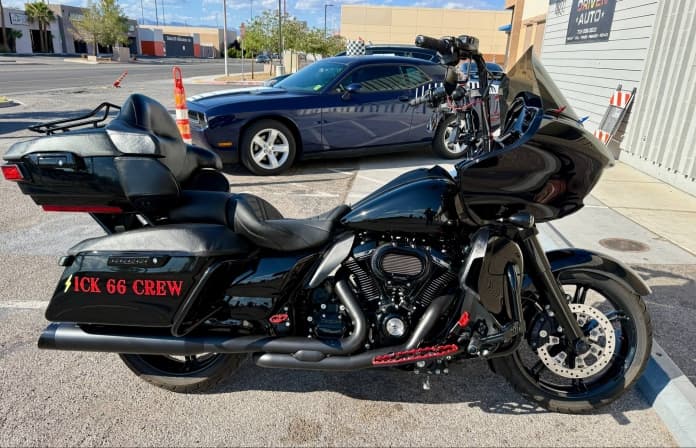
Professional motorcycle ceramic coating typically runs $500 to $1,200+. Where your bike lands in that range depends on how many years of protection you choose, how much paint correction or polishing the surface needs first, and your bike's size and condition. For most riders who keep their bike outdoors or put on real miles, it's worth it. The coating bonds to the surface and outlasts wax by years, not weeks, while repelling water and road grime and making the bike noticeably easier to clean.
This guide covers what drives the cost, what the coating actually does, a note on matte-finish bikes specifically, and how it compares to wax.
What Motorcycle Ceramic Coating Costs
A professional job runs $500 to $1,200+. Four things move you within that range:
- Years of protection selected. Coatings are typically offered in tiers by duration, and a longer-lasting formula costs more upfront.
- Correction or polishing needed first. A coating only bonds properly to a clean, defect-free surface, so a bike with existing swirls, oxidation, or scratches needs that addressed before coating, which adds to the price.
- Bike size and surface area. A touring bike with more painted bodywork takes more coating and more labor than a compact standard or sportbike.
- Overall condition. A well-maintained bike with minimal correction needed costs less than one that's spent years outdoors accumulating oxidation and swirl marks.
We confirm your exact price after a look at your bike's condition, since the prep work is the part that varies most.
Is Ceramic Coating Worth It for a Motorcycle?
For most bikes that live outside or see real miles, yes. The coating bonds to the surface and lasts years rather than months. It repels water and road grime, which makes washing noticeably easier than keeping up a wax layer.
It's a stronger case when:
- Your bike is stored outside rather than in a garage
- You ride regularly and deal with road grime, bugs, and weather
- You're tired of rewaxing every few weeks to keep the shine up
It's a weaker case when:
- You store the bike indoors and rarely ride in poor conditions
- You plan to sell soon and don't need multi-year protection
- The paint already has damage that needs correction beyond what you want to spend on right now
Ceramic Coating for Motorcycles vs. Bicycles
If you searched your way here looking for bicycle frame coating, this guide and our service are for motorcycles, not pedal bikes. The prep, products, and pricing are entirely different between a gas motorcycle's painted bodywork and a bicycle frame, so if that's what you're after, a bike shop specializing in cycling equipment is the right place to ask, not a motorcycle detailer.
Ceramic Coating on Matte-Finish Motorcycles
Matte paint needs a different product than standard glossy ceramic coating, and this is a common mistake in DIY application. A standard high-gloss ceramic formula will make matte paint shiny, which permanently changes the finish you paid for. Matte-specific ceramic coatings exist precisely to preserve that low-sheen look while still adding the same UV and water protection.
If your bike has a matte, satin, or flat finish, confirm with whoever's doing the work that they're using a matte-safe product, not just applying the standard formula and hoping it looks fine.
Ceramic Coating vs. Wax for a Motorcycle
Both protect the paint, but they work on very different timelines.
- Lifespan: wax lasts weeks; ceramic coating lasts years.
- Water repelling: ceramic beads and sheets water more aggressively than wax.
- Cleaning: a coated surface releases dirt and bugs more easily, cutting down wash time.
- Upfront cost: wax is cheaper per application but needs constant reapplication; ceramic is a larger one-time investment that pays off over the ownership period.
Wax is a reasonable choice if you're not ready for the ceramic investment yet or plan to sell soon. Ceramic makes more sense if you want to spend less time maintaining the shine and more time riding.
What the Process Involves
A ceramic coating job isn't a quick spray-and-go. The prep is what determines the result:
- Wash and decontaminate the full bike
- Correct any existing swirls, oxidation, or light scratches
- Wipe down with a panel prep to strip remaining oils
- Apply the coating to paint, and other compatible surfaces like tanks and fairings
- Allow proper cure time before the bike gets wet or ridden
Rushed prep is the most common reason a coating fails early or looks streaky, so a detailer who takes the time here matters more than the specific product used.
Frequently Asked Questions
What's the biggest factor in motorcycle ceramic coating cost?
Correction and polishing work, not the coating itself. A bike in good condition needing minimal prep sits toward the lower end of the $500 to $1,200+ range, while one with existing swirls or oxidation that needs correcting first sits toward the higher end.
Can I ceramic coat a matte-finish motorcycle without losing the matte look?
Yes, but only with a matte-specific ceramic product. A standard glossy formula will make matte paint shiny. Confirm the product being used is matte-safe before the job starts if preserving that finish matters to you.
Does ceramic coating work the same on a motorcycle as it does on a car?
The core chemistry is the same, but application differs. Motorcycles have more exposed components, chrome, fairings, tanks, and painted panels in tight, curved areas, that require more careful masking and technique than a car's larger flat panels.
How long does motorcycle ceramic coating actually last?
Professional coatings are typically sold in tiered durations, commonly ranging from one to several years depending on the product selected. Storage conditions matter: a bike kept outdoors in strong sun sees faster wear than one stored covered or indoors.
Do I need paint correction before ceramic coating my motorcycle?
Most bikes with any real time outdoors do. A coating bonds best to a clean, defect-free surface, so swirls, light oxidation, or scratches typically get addressed first. We inspect and tell you honestly whether your bike needs that step or is ready to coat as-is.
Ready to Protect Your Bike?
Our mobile team brings the full process to your driveway or garage, from correction through cure, backed by a 5-star rating and full insurance on every job.
Motorcycle Detailing Near You
AtlantaBaltimoreBirminghamColumbusDallasDenverHuntsvilleIndianapolisJacksonvilleLos AngelesMemphisMinneapolisNew YorkNorfolkOrlandoSan AntonioSan JoseSavannahSeattleTampaTulsaWilmington