
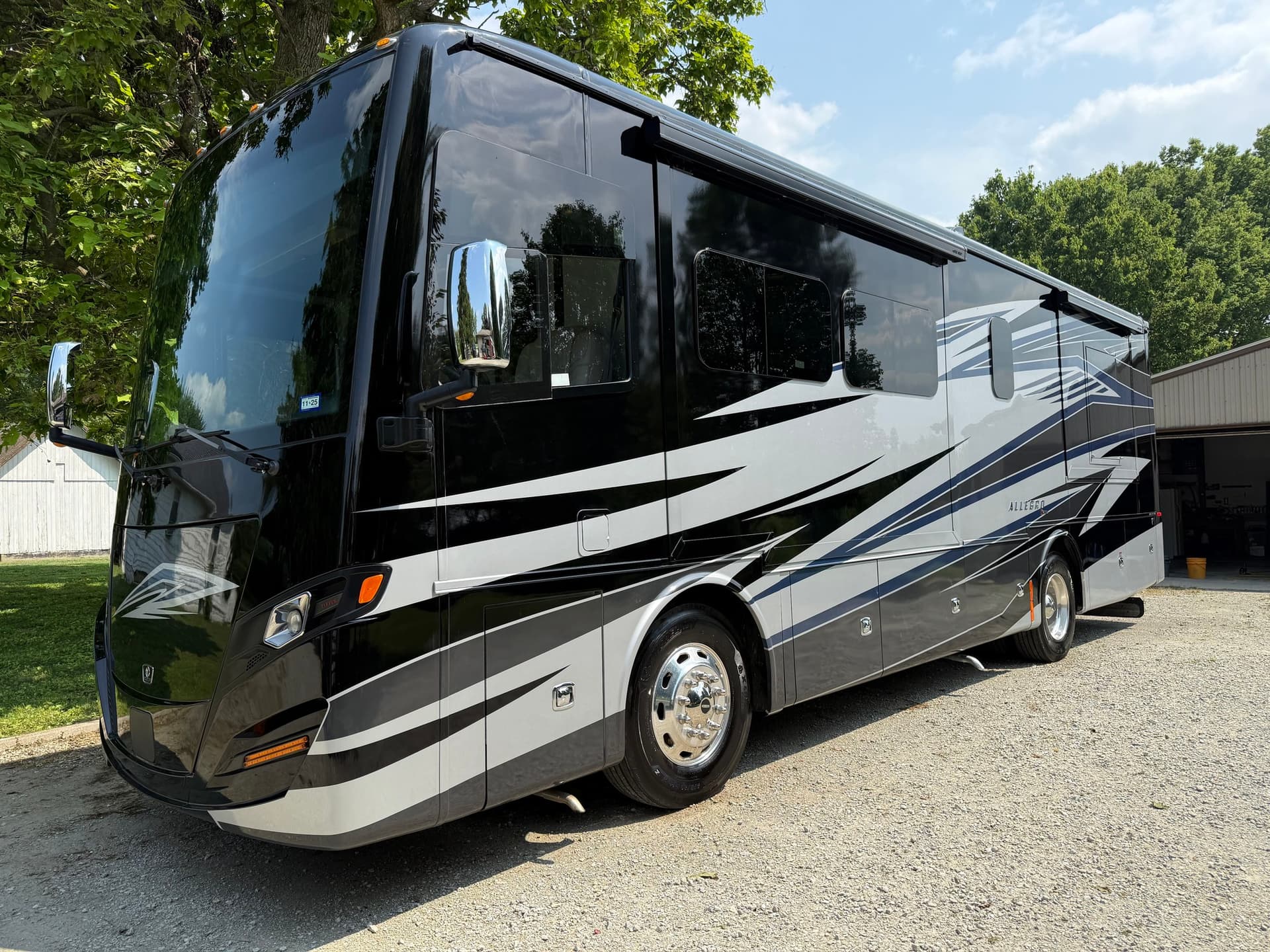
RV ceramic coating is worth it if you keep your rig for three or more years and store it outside. It's a liquid polymer that bonds to your gelcoat or paint, forming a hard, glossy, water-repelling layer that blocks UV, cuts down on washing, and outlasts wax by years instead of weeks. It costs more upfront than wax, but for long-term owners the maintenance savings alone usually justify it. This guide covers real cost by RV type, how long it lasts, the gelcoat-vs-painted prep difference, and how it stacks up against wax.
How Long Does RV Ceramic Coating Last?
A quality RV ceramic coating lasts 2 to 5 years depending on the product, the prep work, and how the rig is stored. Professional-grade coatings outlast store-bought sprays by a wide margin.
- DIY spray coatings: 6 months to 1 year
- Consumer ceramic kits: 1 to 2 years
- Professional multi-layer coatings: 3 to 5 years
UV exposure and wash habits are the two biggest factors. An RV stored outside in strong sun ages faster than one kept under cover, and harsh chemicals or dirty wash mitts shorten the life of any coating regardless of how well it was applied.
What RV Ceramic Coating Costs by Type
Cost climbs with rig size and how much prep the surface needs before coating.
- Travel trailer (20–30 ft): $1,500 to $2,500
- Class C motorhome: $2,000 to $3,500
- Class A motorhome (35–45 ft): $3,000 to $4,500+
Toy haulers and fifth wheels typically fall in the travel trailer to Class C range depending on length, since pricing follows total exterior surface area rather than the RV category itself. Most of the cost is prep, not the coating: washing, decontaminating, removing oxidation, and polishing before a single drop of coating goes on. Pricing for your specific rig depends on length and the current condition of the gelcoat or paint.
Gelcoat vs. Painted RV Surfaces: Why Prep Is Different
Most fiberglass RVs have a gelcoat finish, not paint, and that distinction changes how the surface needs to be prepped before coating.
Gelcoat is a thick, pigmented resin layer molded into the fiberglass itself. It oxidizes and chalks with UV exposure the way car paint does, but it responds differently to compounds and needs its own correction approach before a coating will bond properly. Painted RV surfaces, more common on aluminum-sided rigs and newer fiberglass models with a clear coat layer, correct more like automotive paint.
Skipping this distinction is a common reason DIY coatings fail early: a gelcoat surface that isn't properly decontaminated and corrected won't let the coating bond evenly, leading to streaking or early breakdown. A tech should identify which surface type your RV has before quoting the job, not after.
Is RV Ceramic Coating Worth It?
Ceramic coating pays off for RV owners who keep the rig long enough to get past the higher upfront cost.
It's worth it when:
- You keep your RV for 3 or more years
- You store it outside in strong sun
- You're tired of waxing twice a year
- You want easier washes and stronger UV defense
It may not be worth it when:
- You plan to sell within a year
- You store it indoors and rarely use it
- Wax is doing the job fine for now and budget is tight
For full-time and frequent RVers, the extended lifespan and lower ongoing maintenance typically pay for themselves within a few seasons.
RV Ceramic Coating vs. Wax
Both protect the surface, but on very different timelines and budgets.
- Lifespan: wax lasts 6 to 12 weeks; ceramic lasts 2 to 5 years
- UV protection: ceramic blocks more UV and slows fading noticeably better
- Water repelling: ceramic beads and sheets water far more aggressively than wax
- Cost: wax runs $20 to $60 in product per application; ceramic runs into the thousands installed
- Ease of washing: a ceramic-coated surface stays slick, so dirt and grime rinse off with less scrubbing
Wax is a fine short-term option if you're not ready for the ceramic investment. Ceramic is the better call if you'd rather stop climbing a ladder to wax the roof twice a year.
What "Graphene" Ceramic Coating Actually Means
You'll see graphene-infused ceramic coatings marketed as an upgrade over standard ceramic. Graphene additives improve heat dissipation and can add some flexibility to the cured coating, which helps it resist micro-cracking over time. It's a legitimate formula variation, not a different category of product, and the core value proposition, UV protection, hydrophobic performance, and multi-year durability, is the same. The bigger factor in how any ceramic coating performs long-term is prep quality and application, not whether the formula includes graphene.
Can You Ceramic Coat an RV Roof?
Yes, and it's one of the most worthwhile spots to protect, since the roof takes the most direct sun and is the hardest surface to clean by hand.
- Blocks UV that dries out and cracks rubber and fiberglass roofing
- Repels water to reduce pooling and streaking down the sidewalls
- Makes black streaks easier to rinse off instead of scrubbing them out
Roof material matters here. EPDM and TPO rubber roofs need coatings formulated for rubber. Fiberglass and aluminum roofs take standard automotive-style ceramic. Match the product to the roof material, or confirm with whoever's doing the work.
What to Expect During the Job
An RV ceramic coating job is a multi-day process, not an afternoon appointment. The prep is where the result actually gets decided.
- Wash and decontaminate the full exterior
- Remove oxidation from faded or chalky gelcoat
- Polish to remove swirls and bring back the shine
- Wipe down with a panel prep to strip remaining oils
- Apply the coating panel by panel, then level it
- Let it cure, often 12 to 24 hours before any water exposure
A large rig can take 2 to 4 days start to finish. Rushed prep is the most common reason a coating fails early or looks uneven, so a detailer who won't cut corners here is worth the extra time.
Frequently Asked Questions
Is RV ceramic coating worth the cost compared to just waxing every season?
For owners keeping the RV 3+ years, yes: the $1,500–$4,500 upfront cost typically works out cheaper than repeated wax applications over that same period, once you factor in product cost and the labor of reapplying wax every 6 to 12 weeks versus a coating that holds for years.
Does ceramic coating work on a toy hauler or fifth wheel the same way it does on a motorhome?
Yes. Pricing and prep follow total exterior surface area and current gelcoat or paint condition, not the specific RV category, so a toy hauler or fifth wheel is quoted the same way as a travel trailer of similar length rather than as a separate service type.
What's the actual difference between gelcoat and painted RV surfaces for coating purposes?
Gelcoat is a pigmented resin molded into the fiberglass and needs its own decontamination and correction approach before a coating bonds properly. Painted surfaces, more common on aluminum-sided RVs, correct more like standard automotive paint. Getting this wrong during prep is a common cause of early coating failure.
Is graphene ceramic coating better than standard ceramic coating for an RV?
Graphene additives improve heat dissipation and add some resistance to micro-cracking, but they don't change the core protection level. Application quality and surface prep affect how long any ceramic coating lasts far more than whether the formula includes graphene.
Can I ceramic coat my RV myself?
You can apply a DIY kit, but results depend heavily on prep. A coating only bonds properly to a clean, oxidation-free, polished surface, and on a large rig at height that prep is a long, physical job. Most owners hire a pro to get the multi-year lifespan and avoid streaking or an early-failing coating.
Ready to Protect Your RV?
RV ceramic coating pays off for owners who keep their rig long term and want less maintenance with stronger protection. Our mobile team handles the full job at your location, from oxidation removal through cure, backed by a 4.9-star rating and full insurance.
Check packages and book online
RV Detailing Services Near You
AtlantaBaltimoreBirminghamColumbusDallasDenverHuntsvilleIndianapolisJacksonvilleLos AngelesMemphisMinneapolisNew YorkNorfolkOrlandoSan AntonioSan JoseSavannahSeattleTampaTulsaWilmington