
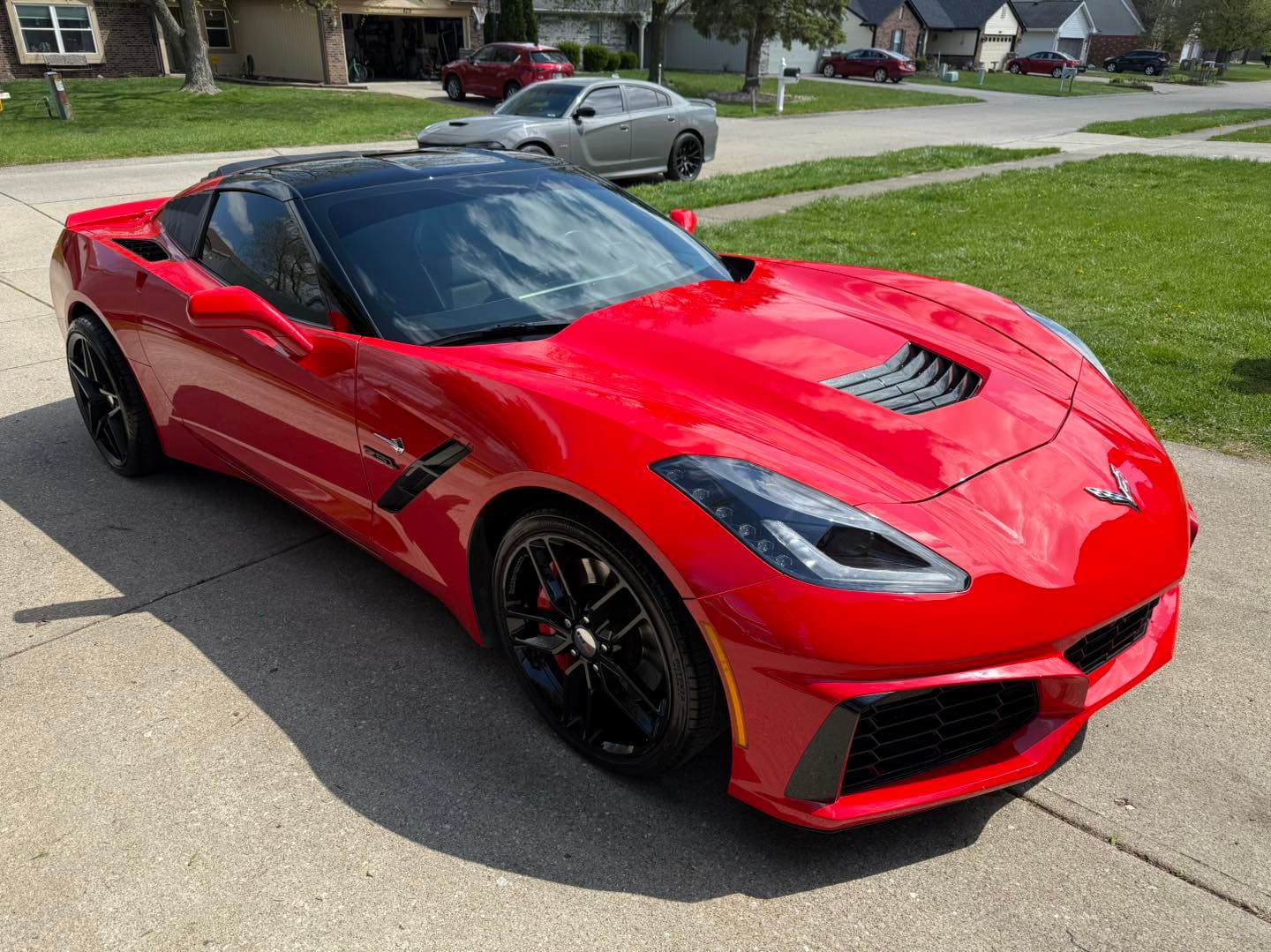
Paint correction is the process of removing swirl marks, scratches, and oxidation from a car's clear coat using a machine polisher and abrasive compounds, restoring depth and gloss without repainting anything. Unlike wax or sealant, which sit on top of the paint and add shine, correction actually improves the surface underneath by leveling out the defects instead of just covering them. Most cars need a one-step or two-step correction, and the result lasts for years if the paint is washed and protected properly.
What Paint Correction Fixes
Correction addresses defects that live in the clear coat, the transparent outer layer of the paint system:
- Swirl marks from improper washing, automatic car washes, or wiping with a dry cloth
- Marring: fine, random light scratching from dirty towels or wiping a dusty car
- Buffer trails and holograms left by earlier machine polishing done incorrectly
- Water spot etching, where mineral deposits have bonded with or etched into the clear coat
- Fine surface scratches that have not cut through the clear coat
- Oxidation, the UV-driven breakdown that makes paint look dull, chalky, or hazy
- Chemical etching from bird droppings, tree sap, or harsh chemicals left too long
Every one of these defects scatters light. Wax and sealants sit on top and add gloss, but they do not remove the damage underneath.
Does Paint Correction Fix Scratches?
Yes, if the scratch is in the clear coat. No, if it has reached the color or primer. Correction levels the clear coat down to the bottom of a scratch, so light and moderate scratches that your fingernail doesn't catch can usually be removed or made much less visible. Scratches that catch your nail, or show the car's color, grey primer or metal, are below the clear coat. Correction can soften their edges, but they need touch-up paint or a repaint to disappear.
- Nail glides over it and it fades when wet: correction will usually remove it.
- Nail catches slightly, still white: sometimes removable with wet sanding plus correction, if the clear coat is thick enough.
- Color, grey or metal showing: touch-up or body shop, not correction.
Full guide: How to Tell If a Scratch Is in the Clear Coat or the Paint.
What Is Paint Marring?
Marring is fine, random, light scratching in the top of the clear coat. It's usually caused by drying with a dirty or rough towel, automatic car washes, wiping dust off dry paint, or polishing with a dirty pad. Swirls are marring in a circular pattern. Marring makes paint look hazy in sunlight, especially on dark colors. Because it's so shallow, a one-step polish usually removes most of it and a two-step correction removes nearly all of it. To prevent it, wash with two buckets and a clean mitt, dry with plush towels, and never wipe a dry, dusty car. See How to Wash a Car Without Scratching the Paint.
How Paint Correction Works
Correction removes a microscopically thin layer of clear coat to level out whatever is making the paint look dull, hazy, or scratched. It happens in stages:
- Wash. The car is fully cleaned so loose dirt doesn't scratch the paint during the next steps.
- Decontaminate. An iron remover dissolves bonded metal particles, then a clay bar or clay mitt lifts tar, sap and industrial fallout. Skipping this drags contamination around during polishing and adds new scratches.
- Inspect and measure. Under sunlight, raking LED light and a swirl finder, the technician identifies the defects and measures paint thickness on each panel. A test spot confirms the pad and compound combination before the whole car is committed.
- Compound. A cutting compound and a machine polisher level the heavier defects: deep swirls, scratches and heavy oxidation. Dual-action (DA) polishers spread heat and lower burn-through risk; rotary machines cut faster but generate more heat.
- Polish. A finer polish clears any haze left by compounding and brings out maximum gloss. Three-step jobs add a finishing pass on a soft pad for show-quality clarity.
- Protect. A panel wipe removes polishing oils, then a wax, sealant or ceramic coating locks in the result. Bare corrected clear coat has no protection and starts collecting new swirls immediately.
The full process typically runs 8 to 24 hours depending on vehicle size, defect severity and the number of stages.
Clear Coat Thickness and the Paint Depth Gauge
Every correction removes a little clear coat permanently, so knowing how much is there matters. Typical factory clear coat is about 1.5 to 2 mils (roughly 38 to 50 microns), and the whole factory paint system is commonly around 3.5 to 6 mils. For scale, a sheet of copy paper is about 4 mils. A good correction removes only a small fraction of that, and many references put the safe lifetime removal at roughly 0.3 to 0.5 mils.
A paint depth gauge measures total paint thickness over the metal at a given spot. Pros take readings across each panel to find thin areas (edges, body lines, previously corrected panels), spot repainted panels, and decide how aggressive the compound and pad can safely be. A gauge can't separate the clear coat from the layers beneath it, so pros stay conservative on low readings. That's also why most cars only need real correction once or twice in their lifetime, not as a routine service.
Sources: Ford Research & Advanced Engineering, "Paint Materials and Processes from an Automotive OEM Perspective" (NIST, 2016); OCD Car Care paint thickness gauge guide; Revivify, "How Thick Is Automotive Clear Coat?"
How to Tell If Your Car Needs Correction
- Look under direct sunlight or a flashlight at an angle. Swirls show as a fine, circular spiderweb pattern, most visible on dark paint.
- Run a fingernail across any scratch. If it doesn't catch, it's likely shallow enough for correction to remove.
- Check for a hazy, flat look that wax doesn't fix. That's usually oxidation or embedded fine scratches, not a lack of protection.
- Feel the paint after washing. A gritty texture means bonded contamination, which should be removed before deciding whether correction is even needed.
If none of these show up, your paint probably just needs a wash and a wax or sealant. If several do, get it inspected. For swirl-specific technique, see how to remove swirl marks from car paint.
The Stages of Paint Correction (1-Step, 2-Step, 3-Step)
Detailers categorize correction by the number of stages, and therefore how much defect removal they attempt. "Single-stage" means one step; "multi-stage" means two or more. The labels are widely used but not universally standardized.
| 1-Step (Stage 1) | 2-Step (Stage 2) | 3-Step (Stage 3) | |
|---|---|---|---|
| Also called | Enhancement polish, AIO | Compound and polish | Heavy cut, polish and jewel; show-car correction |
| What it removes | 60 to 70% of light swirls, marring, light oxidation and light water spots | 85 to 95% of swirls, marring, light scratches and most holograms | 95 to 100% of defects within safe clear-coat limits |
| What remains | Deeper scratches, heavy holograms, severe etching, RIDS | Scratches that catch a nail, heavy etching | Only defects too deep to remove safely |
| Typical time | 4 to 6 hours (sedan) | 8 to 14 hours | 16 to 24+ hours |
| Typical cost | $250 to $350 | $350 to $550 | $550 to $800+ |
| Best for | Good paint, wax or sealant on top, selling soon | Most daily drivers, ceramic coating prep | Show cars, high-value cars, top-tier ceramic or PPF |
How to choose: if swirls only show under an inspection light, a one-step is usually enough. If they show in direct sun from a few feet away, or a ceramic coating or PPF is going on, two-step is the minimum. For about 80% of vehicles and owners, two-step is the best balance of result, cost and time. Even a three-step is limited by clear-coat thickness: some defects are too deep to chase safely, and a reputable detailer will leave them or recommend spot wet sanding. "Perfect paint" means zero defects under realistic inspection, not under maximum magnification.
See Level 1, 2, and 3 correction matched to defect severity.
Paint Correction vs Polishing vs Buffing vs Cut and Buff vs Detailing
In an auto parts store, "polish" can mean anything from a wax-and-polish bottle to a heavy compound. To a detailer, polishing is one specific step inside a multi-stage correction. The words overlap; the work does not.
| Term | What it means | Removes defects? | Typical use |
|---|---|---|---|
| Paint correction | Measured, multi-step machine process with inspection and paint gauging, aimed at a removal target | Yes: swirls, marring, light scratches, holograms, oxidation | Restoring paint, ceramic prep |
| Polishing | One step with a fine polish (or the finishing step after compounding) | Some: 50 to 70% of light swirls and haze | Enhancement before wax or sealant |
| Buffing | A loose term for any machine work on paint, from compounding to applying wax | Depends on the product and pad | Ask what's actually included |
| Cut and buff | A cutting compound pass, then a buff to gloss, often single-stage | Mostly the heavier defects, in one pass | Oxidized or neglected paint, RVs and boats |
| Detailing | Cleaning, decontaminating and protecting the whole vehicle | Not by itself; polishing may be an add-on | Regular maintenance |
Choose a light polish when the car has only minor swirls, you're topping it with wax or sealant, or budget and time are limited. Choose full correction when defects are visible in indoor light, include holograms or RIDS, a ceramic coating is going on, or the car has show or resale value and enough clear coat. Light polish after clay lives in clay bar packages; defect removal starts at paint correction from $399. More on cut and buff: What Is Cut and Buff? and Wet Sanding vs Cut and Buff.
What Paint Correction Costs
About $250 to $350 for a one-step, $350 to $550 for a two-step, and $550 to $800+ for a three-step show-level job. Most full corrections land in the $350 to $550 band, depending on size and condition. A simpler cut and buff runs $150 to $500 and handles lighter defects in a single pass. A two-hour wax around $150 is not the same job: wax adds temporary shine, while correction physically restores the clear coat.
For the full breakdown by vehicle size, condition and mobile vs shop, see How Much Does Paint Correction Cost?.
Is Paint Correction Worth It?
For a daily driver with real swirl marks and dulled paint, yes. Correction restores depth and gloss that wax or sealant alone can't create, and it costs a fraction of a repaint. It's especially worth it before selling, since swirl-free paint reads as well-maintained to a buyer, and before a ceramic coating.
It's not the right move for paint that's already thin from repeated past corrections, or for damage that has gone through the clear coat. In both cases correction either can't help or risks doing more harm than good. An honest technician tells you which category your car falls into before recommending a service, not after.
Paint Correction Before Ceramic Coating
A ceramic coating locks in whatever is underneath it, so swirls, marring and holograms left on the paint stay visible under the coating for its whole life. That's why correction (usually at least a two-step) comes first, followed by a panel wipe so the coating bonds to clean, bare clear coat. The coating then protects the corrected finish and makes it last far longer. Full guide: Why Paint Correction Is Often Needed Before Ceramic Coating.
How Long Does Paint Correction Last?
The correction itself is permanent: removed defects don't come back. What wears is the finish, because new swirls and marring are added every time the car is washed badly or wiped while dirty. How long it looks corrected depends on protection and washing:
- Wax only: protection lasts weeks to a few months, so new marring builds up sooner.
- Sealant: several months.
- Ceramic coating: years, depending on the product and upkeep, with better resistance to wash marring.
- Automatic brush car washes: can undo a correction within a few washes.
With careful washing and protection, most daily drivers only need a light polish years later, not a full correction again.
Paint Correction Aftercare
- Protect it right away with wax, sealant or ceramic coating.
- Follow the coating maker's cure time before the first wash.
- Hand wash with two buckets, a pH-neutral shampoo and a clean mitt.
- Dry with a plush microfiber or a blower; never wipe dust off dry paint.
- Skip automatic brush washes.
- Remove bird droppings, bugs and sap quickly.
- Top up the protection as the product directs, and inspect yearly.
DIY vs Professional Paint Correction
DIY correction is possible with a dual-action polisher, the right pads and compounds, good lighting and a paint depth gauge, but burning through edges, leaving holograms or removing too much clear coat are real risks. Go professional for thin or repainted panels, dark paint, deep defects or ceramic coating prep. Read Common DIY Paint Correction Mistakes to Avoid before trying it yourself.
Want it done for you?
We inspect and gauge your paint first, then recommend the right level: a one-step polish, a full correction, or just a wash and protection. Our mobile team does the work at your home or office. See paint correction or get a free quote.
Frequently Asked Questions
What is paint correction on a car?
Machine polishing that removes a thin layer of clear coat to level out swirls, marring, light scratches, oxidation and water spot etching, restoring gloss instead of hiding defects like wax or glaze.
How do I know if my car needs paint correction or just a wash and wax?
Check under direct sunlight for a spiderweb of fine scratches and run a fingernail across any scratch. If the paint still looks dull after washing and waxing, correction is likely worth it. If it looks fine but lacks shine, a wash and wax is probably enough.
What's the difference between single-stage and multi-stage paint correction?
Single-stage (one-step) uses one product and pad and removes about 60 to 70% of light defects. Multi-stage cuts with a compound, then refines with one or two polishes, removing 85 to 100% with a cleaner finish.
Which correction level does my car need?
Swirls only under an inspection light: one-step may be enough. Visible in sunlight from a few feet, or ceramic coating or PPF planned: two-step minimum. Show-car expectations: two or three-step. Two-step is the sweet spot for most daily drivers.
Can paint correction remove all scratches?
It removes swirls and light to moderate scratches within the clear coat, typically 70 to 95% of visible defects. If your fingernail catches, or you can see color or primer, it needs touch-up paint or a repaint.
Does paint correction damage clear coat?
Done properly, it removes only a small, measured fraction of the clear coat. Damage happens when it's too aggressive, repeated too often, or done on thin or repainted paint, which is why pros gauge the paint first.
How often does a car need paint correction?
Most cars need full correction only once or twice in their lifetime. Every pass removes clear coat permanently, so regular washing and protection, plus an occasional light polish, should do the rest.
How long does paint correction take?
About 4 to 6 hours for a one-step on a small to midsize car, 8 to 14 hours for a two-step, and 16 to 24 hours or more for a three-step.
Should I get ceramic coating right after paint correction?
Yes, it's a smart pairing. Freshly corrected paint has no protection, and a coating applied right after locks in the result and keeps it looking corrected far longer.
Can I do paint correction myself?
Technically yes, but the wrong angle, too much pressure or the wrong product on thin paint can burn through the clear coat. You need a DA polisher, a paint thickness gauge, the right pads and compounds, and good lighting. Practice on a scrap panel first.
Paint Correction Near You
AtlantaBaltimoreBirminghamColumbusDallasDenverHuntsvilleIndianapolisJacksonvilleLos AngelesMemphisMinneapolisNew YorkNorfolkOrlandoSan AntonioSan JoseSavannahSeattleTampaTulsaWilmington