
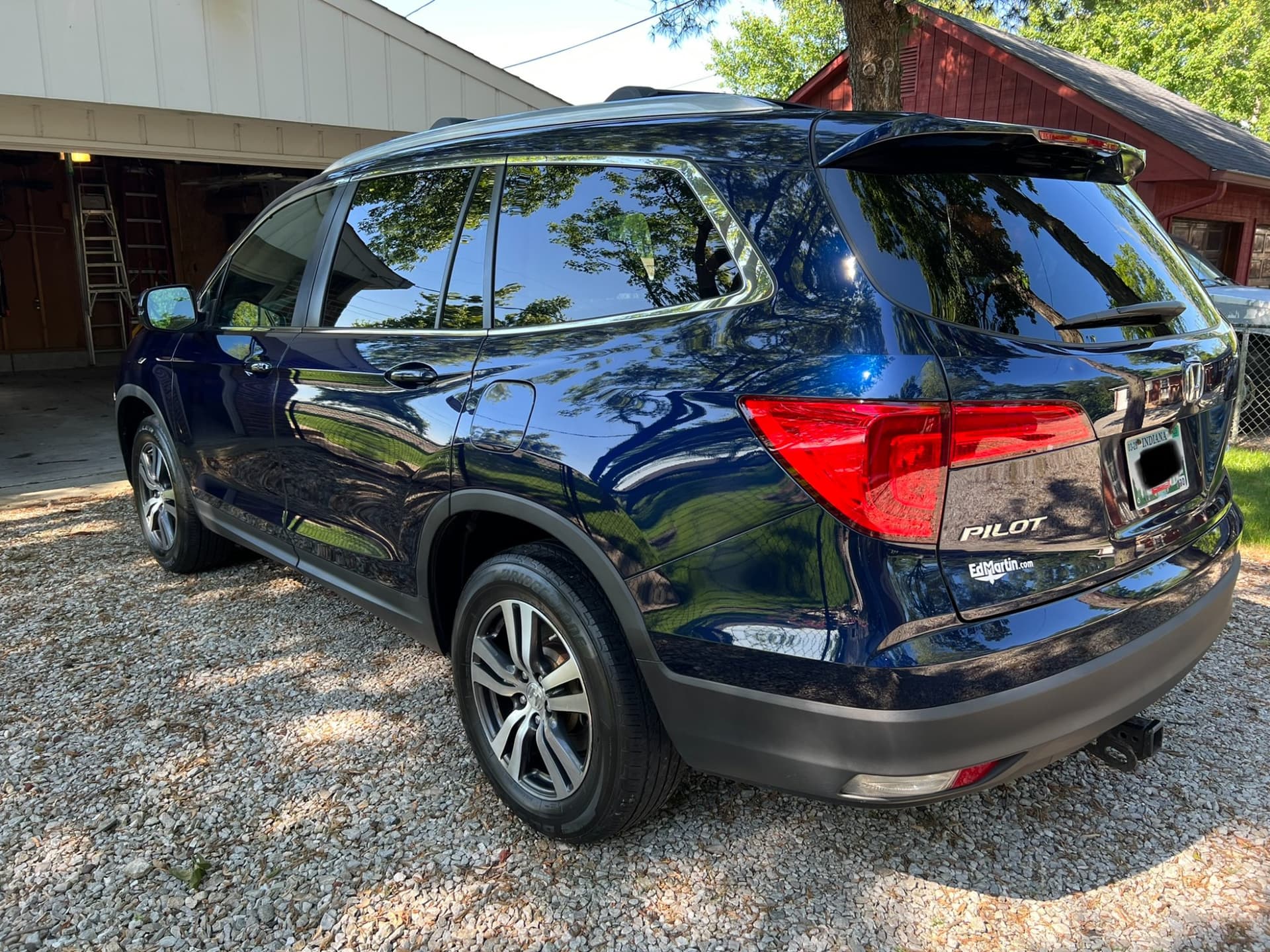
Before any detailer commits to cut and buff or correction work, the first question is always the same: how deep is the scratch? The answer determines whether the fix is mechanical (compound and polish) or whether it needs material added back (touch-up, wet sanding, or repaint).
The structure of automotive paint
Most modern automotive paint is layered. From the metal up:
- Substrate — bare metal panel
- Electrocoat (e-coat) — corrosion protection, typically dark gray or black
- Primer — gray, light gray, or color-matched
- Base color coat — the actual color of the car (no gloss on its own)
- Clear coat — the protective, glossy top layer
The clear coat is what gives modern cars their shine and protects the color from UV damage. It's also where almost every scratch you can see lives — at least at first.
The fingernail test
The single most reliable home check for scratch depth:
- Run your fingernail across the scratch, perpendicular to it
- If your nail glides smoothly with no catch, the scratch is shallow — almost certainly in the clear coat only
- If your nail catches noticeably, the scratch has cut through the clear coat and may have caught the base color
Catches you can feel with a fingernail are typically too deep for compound and polish to remove safely. There simply isn't enough clear coat above the scratch to level it without exposing the base color underneath.
The visual inspection check
Look at the scratch in direct sunlight or under a bright LED:
- White or light-colored line on a dark car — usually clear coat only. The clear has been disturbed but the color hasn't been broken. Cut and buff can usually remove this.
- Color visible at the scratch base — base coat is exposed. Compound won't help; you need touch-up.
- Primer-gray line visible — the scratch has cut all the way through. Touch-up minimum, possibly more.
- Bare metal visible — full-depth scratch. Needs body shop repair before rust starts.
The water test as a quick check
Wet the scratch with water. If the scratch disappears or fades dramatically while wet, it's almost certainly clear-coat-only — the water is temporarily filling the void in the clear and restoring optical clarity. That scratch can usually be polished out.
If the scratch is still clearly visible when wet, the depth is significant and you're likely past clear coat.
What cut and buff can actually fix
Compounding removes clear coat. The maximum safe removal is typically 0.3–0.5 mils of clear (depending on starting thickness, which is why pros measure first). That's enough to level most:
- Swirl marks
- Spider webbing
- Light to moderate scratches (no fingernail catch)
- Light etching from water spots or bird droppings caught early
It is not enough to remove deeper scratches, etching that's been on the paint for months, or any defect that has reached the base coat.
When wet sanding enters the picture
For scratches that fail the fingernail test but haven't fully cut through the clear coat, an experienced detailer or body tech can sometimes wet sand the area — using very fine sandpaper (2000–3000 grit) with water as a lubricant to level the scratch — then compound and polish back to a smooth, glossy finish.
This is risky work. It removes more clear coat than standard compounding, requires real skill to avoid burning through, and isn't always appropriate. But for the right scratch on the right paint, it can save what would otherwise be a touch-up or paint job.
When it's time to call a body shop
If the scratch shows color, primer, or metal, no amount of polishing will help. Touch-up paint can fill and seal small chips before they rust. Larger scratches need professional repair to look right — and to prevent corrosion underneath.
---
Book cut & buff after a fingernail test shows clear-coat-only damage.
When you are ready, browse detailing packages or request a quote. Learn more at Mobile Detailing Expert.
Paint Correction Near You
AtlantaBaltimoreBirminghamColumbusDallasDenverHuntsvilleIndianapolisJacksonvilleLos AngelesMemphisMinneapolisNew YorkNorfolkOrlandoSan AntonioSan JoseSavannahSeattleTampaTulsaWilmington